

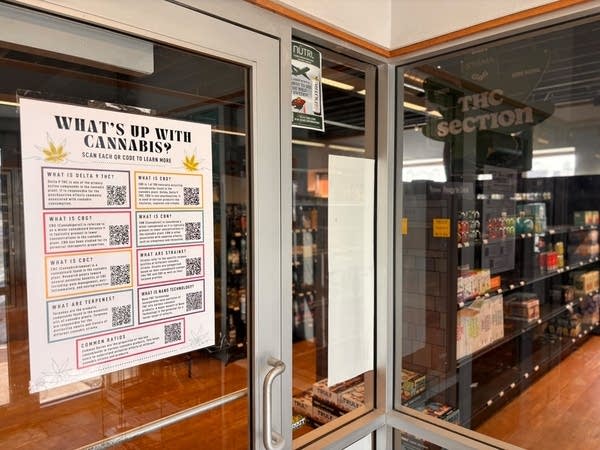
Kai Wicker makes a point to educate his liquor store customers about THC whenever he can. He posts informational flyers outside of the Moorhead liquor store and hosts “THC Tastings” every month.
It started when he became general manager three years ago, when he made it his mission to convince the owner to stock the store with THC drinks. For him, it’s personal.
“It helps me,” Wicker said. “I've had ADHD my whole life, and I was a chef for many years. It just kind of calms me down, makes me a more civil, better person.”
The owner of the shop took some convincing, Wicker said, since he didn’t know a lot about THC beverages, which were made federally legal in 2018. Today, they sometimes account for roughly half of the store’s business, Wicker said, and he’s built a community around them.
But that might be coming to an end. Last year, Congress passed a law that would ban the type of cannabis products that 99 Bottles and other stores sell across the country.
It’s still not clear how, or if, that would be enforced in states like Minnesota. That’s created a lot of uncertainty for businesses like Wicker’s that sell hemp-derived products.
Creating a ‘hemp loophole’
The avenue to legally sell these drugs began in 2018, when Congress wanted to reverse a decades-old ban on growing cannabis to make products such as paper, textiles or food without legalizing it as a drug. So, they made some new definitions.
If the cannabis is made up of more than 0.3 percent Delta-9-tetrahydrocannabinol — or THC, the chemical in cannabis that gets someone high — then it's called marijuana, and it's still illegal. Any less than that and it's legal and called “hemp.”
But those definitions proved to be flimsy. There are ways to use concentrated or chemically transformed cannabis to make potent, intoxicating chemical compounds. This so-called “hemp loophole” has federally legalized drugs that effectively produce the same high as marijuana.
States took different approaches to dealing with the loophole. Some states have yet to take any legislative action on hemp, while others have banned many of the products that stemmed from the loophole. Minnesota passed laws regulating hemp edibles in 2022, requiring businesses to get a special license if they want one.
One of those businesses is Ediblez OTC in Moorhead. Owner Steve Rosenfeldt is a pharmacist and, like Wicker, said he had personal ties to his products.
“I had a traumatic situation in my life,” he said. “I ended up going to treatment three times for alcohol, and then after that, the last thing to get me off meds and get back to living life was cannabis. It really helped my sleep, really helped my mood, helped my mental illness and allowed me to kind of move forward with life.”
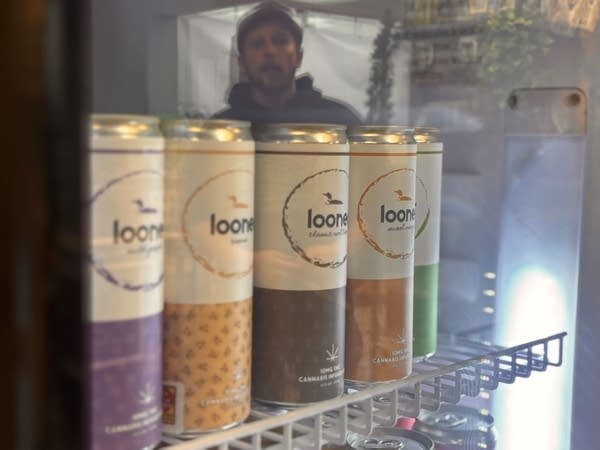
Minnesota sellers like Rosenfeldt have to follow regulations like maximum dosage limits and age restrictions.
Sometimes those aren’t always followed, according to Colin Planalp from the Cannabis Research Center out of the University of Minnesota. Researchers there test businesses by sending in buyers who look under 21 to try to purchase intoxicating hemp products.
“What we find is that, quite frequently, businesses are selling to these folks without ID, in contravention of state law,” he said.
The center also does annual surveys on attitudes around cannabis, and it found that year over year, an increasing majority of Minnesotans want tighter regulations on where hemp drugs can be sold.
“People have raised these concerns about relatively easy access to these intoxicating hemp products by children in places such as gas stations or other shops that don't specialize in age-restricted products,” Planalp said.
‘Closing’ the hemp loophole
U.S. Sen. Mitch McConnell, R-Kentucky, attached language to an appropriations bill last year that would make almost every hemp drug illegal by next November. In a speech on the Senate floor last year, he pointed to a rise in cannabis-related emergency department visits in Kentucky as one of the reasons to close the loophole.
“Young children are consuming these snacks thinking they’re candy, not poison,” he said. “On top of that, these products are easily accessible and can be purchased at convenience stores.”
According to the law that Congress passed last November, the Food and Drug Administration had 90 days to define key parts of the ban, including which cannabis compounds were included.
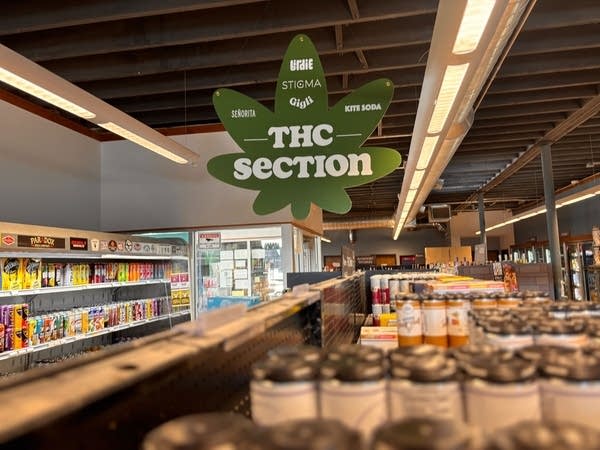
The ban also specified that hemp-derived products containing “greater than 0.4 milligrams (of intoxicating cannabis compounds) combined total per container” would be banned, and the agency was tasked with defining “container.”
That deadline passed last week with no guidance from the FDA posted on the Federal Register.
There are other unanswered questions about the impending ban. For instance, the federal government may crack down on hemp businesses, or it may treat it like it treats marijuana — deferring to states with dispensary programs in place.
“What the federal government has done in those cases with non-hemp cannabis is essentially say, ‘We can't go in and fully enforce these laws in all the states that have legalized cannabis for non-medical use,’” Planalp said.
There are also challenges to the ban itself, including from U.S. Sen. Amy Klobuchar, D-Minn., who filed a bill that would delay it for two additional years.
“We can protect our kids and support our small businesses — Minnesota’s model proves that’s possible,” she said.
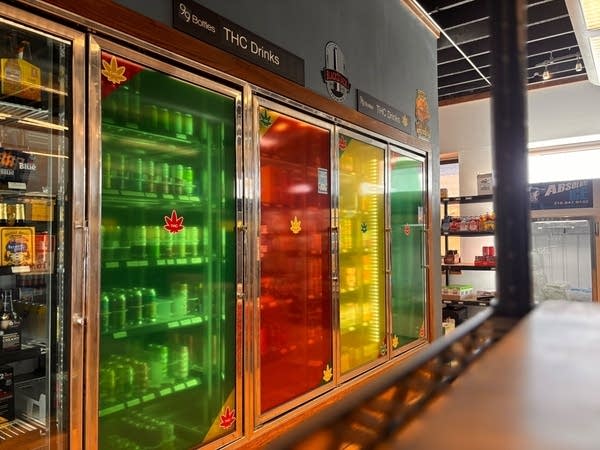
The uncertainty is stressing out local businesses, and some have already started adapting.
Ediblez OTC recently acquired its dispensary license and is rebranding as Rose Buds Cannabis Company. Rosenfeldt was ahead of the curve, starting the process of getting it about three years ago.
“The process for getting this license was excruciating and long, very difficult to do,” he said.
Not everyone is so lucky. While liquor stores have been able to sell hemp, state law says they can’t sell marijuana. So if the ban goes through, that likely means 99 Bottles customers will have to go somewhere else.
“It's gonna hurt this business a lot,” Wicker said. “It's very depressing.”
The ban is set to take effect in November. In the meantime, Wicker said he’s cancelled the THC tastings he used to host at the store.
“We're gonna be holding back on that, just because we don't know about the new laws,” he said.
Correction (Feb 18, 2026): A previous version of this story stated that hemp beverages were split into two servings containing 5 mg of THC to evade Minnesota law. However, Minnesota statute specifically allows beverages to contain 10 mg of THC.


