

The U.S. Senate has voted to overturn a 20-year ban on mining on about 350 square miles of federal land near the Boundary Waters Canoe Area, paving the way for Twin Metals to renew efforts to open an underground copper mine near Ely, on the doorstep of the wilderness area.
The resolution, sponsored by Minnesota Republican U.S. Rep. Pete Stauber, is expected to be signed by President Donald Trump, who promised during his 2024 campaign to repeal the mining moratorium, which President Joe Biden imposed three years ago.
The vote is a major victory for Twin Metals, a subsidiary of the giant Chilean mining company Antofagasta, which has been working for more than a decade to open a mine along the shore of Birch Lake, about seven miles east of Ely, just south of the wilderness area.
The measure passed 50-49, mostly along party lines. All Democrats opposed it, including Minnesota U.S. Sens. Tina Smith and Amy Klobuchar. Smith spoke for hours against the proposal late Wednesday night and again Thursday morning, urging her Republican colleagues to oppose the resolution.
Two Republicans broke ranks and voted against the proposal: Sen. Susan Collins of Maine, and Sen. Thom Tillis of North Carolina.
Mining supporters believe rich deposits of copper and nickel beneath northeastern Minnesota’s forests could jump-start a second mining boom near the state’s Iron Range, providing a giant boost to the region’s economy while also producing critical minerals needed for electric vehicle batteries and other 21st-century technologies.
“The Biden Administration’s decision to enact its illegal mining ban in Northern Minnesota was not only an attack on our way of life and cost countless good-paying, union jobs, it also put our nation’s mineral security at risk.” Stauber, who represents the region, said when he introduced the resolution in January.
Stauber called Thursday’s Senate vote a “major victory for America and Minnesota’s 8th Congressional District. Mining is our past, our present, and our future — and the future looks bright!"

‘Dark day’
The Senate vote is a big blow to conservation groups and others who argue the watershed of the Boundary Waters — a fragile and unique ecosystem and one of the most popular wilderness areas in the country — is the absolute wrong place for this kind of mining, which carries with it much more serious water pollution risks than iron ore mining.
“We can support the need for mining, but that doesn't mean that we mine on the edge of Chaco Canyon or on the rim of the Grand Canyon, and it does not mean that we think that a copper-sulfide mine on the doorstep of the Boundary Waters is a good idea,” Smith said in her remarks before the vote today.
Conservation groups sounded off following the vote.
"Today is a dark day for America’s most beloved Wilderness area, the Boundary Waters Canoe Area Wilderness, and a stark warning call for public lands nationwide," said Ingrid Lyons, executive director of Save the Boundary Waters.
"This is a serious blow to the Boundary Waters and to the future of America’s public lands," added Chris Knopf, executive director of Friends of the Boundary Waters. "A few politicians in Washington chose the interests of a foreign mining conglomerate over the will of the American people, over sound science, and over one of the most irreplaceable wild places on the planet."
Earlier this week, the advocacy group American Rivers listed the South Kawashiwi River as the third most endangered waterway in the nation because of its proximity to the proposed Twin Metals mine.
They also argue the opening of copper-nickel mines on the edge of the wilderness threatens a burgeoning outdoor recreation based economy that supports tourists and retirees and cabin-owners drawn to the area’s quiet beauty.
Political football
The vote culminates a decade-long political tug of war over the potential for mining and exploration on land within the watershed of the Boundary Waters that’s spanned the past four presidential administrations.
The Obama administration first began a study on a possible 20-year mining moratorium just before he left office in 2017. President Trump quickly halted that process during his first term. Then Biden restarted it, and ultimately approved the so-called mineral withdrawal in 2023.
Mining is not allowed inside the Boundary Waters, nor in a small buffer zone around it. The moratorium banned mining within the watershed of the wilderness area. That’s critical, supporters argue, because any mining pollution in those 225,000 acres outside of the BWCA could flow directly into the protected wilderness area. And many of the region’s richest copper-nickel deposits lie within the watershed.
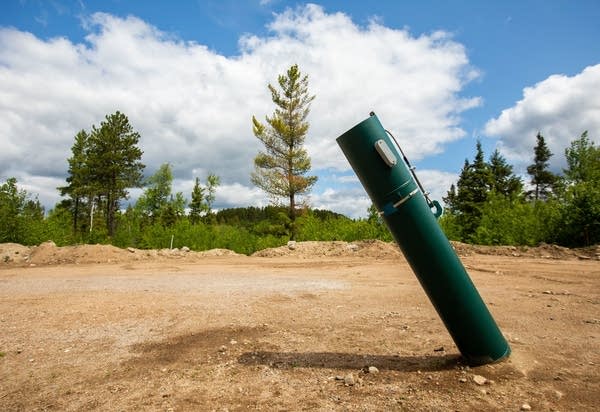
As part of its analysis of the mining ban, the U.S. Forest Service looked at 20 other copper-nickel mines across the U.S. and Canada, and found all resulted in some level of environmental degradation, and that the environmental reviews of those projects frequently underestimated their eventual impacts.
“We support mining, just not this mine in this place,” Minnesota Senator Tina Smith told her colleagues on the Senate floor during a speech Monday in which she urged her Republican colleagues to vote against the proposal. “This is an incredibly special place and this mine poses an unacceptable risk.”
Congressional Review Act
The resolution to reverse the mining ban relied on a law called the Congressional Review Act, a tool that Congress can use to overturn federal agency rules with simple majority votes in both chambers. That prevented Democrats from using the filibuster to derail the measure.
Critics of the resolution said it was the first time the law has been used to overturn a public land order.
“What would it look like if Congress gets into the business of repealing administrative actions that have been in place for years?” said Smith. “I think many people look at that and say, ‘Well, that would just be chaos.’”
The resolution does not allow for a future President to put in place another mining moratorium.
What’s next for mining?
The vote does not mean mining in the region is going to happen anytime soon.
“This vote does not open a mine. It opens the door for a transparent, science-based review,” said Julie Lucas, executive director of the industry group Mining Minnesota.
"We don’t need a mining ban for the entire watershed to protect the Boundary Waters. They are already protected by strict federal and Minnesota laws that require environmental review and permitting processes for any proposed mine,” she added.
Lucas said the public would have “ample opportunities” to comment during the state and federal reviews.
Twin Metals also needs to resecure federal mineral leases for its project that were canceled by the Biden administration in 2022. Stauber has introduced legislation to return those leases to the company.
Ultimately, any proposed mining project in Minnesota needs to go through an extensive environmental review process that typically takes several years, and secure federal permits and state permits from the Minnesota Department of Natural Resources and Minnesota Pollution Control Agency.