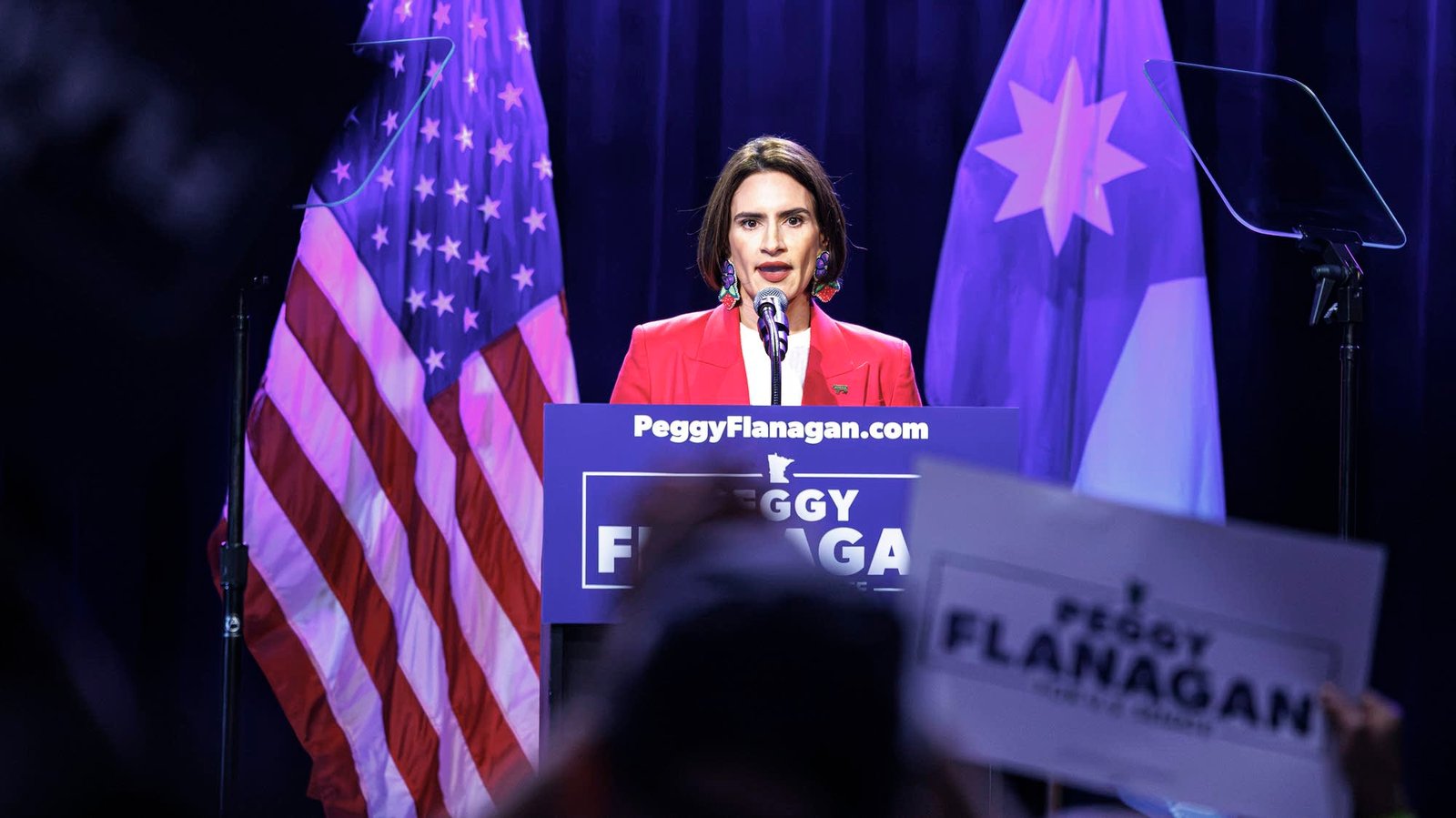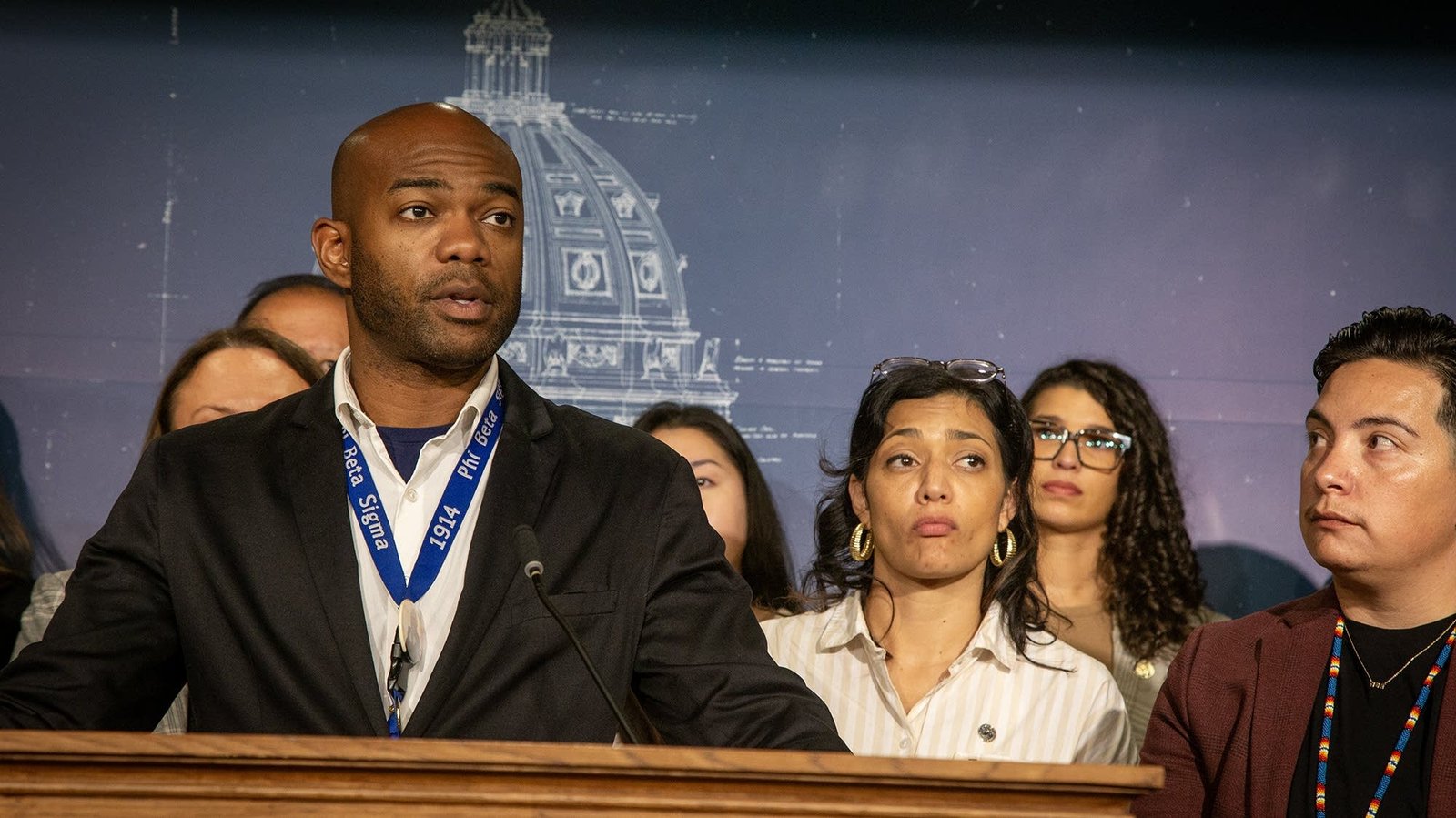

State Rep. Cedrick Frazier is one of two winners in the August primary for Hennepin County attorney, setting up a November matchup with former Acting U.S. Attorney for Minnesota Anders Folk.
Minnesota Now host Nina Moini spoke with both candidates. We aired the conversation with Folk Wednesday and we heard from Rep. Frazier Thursday.
Frazier is a three-term state representative and former public defender. His campaign has focused on gun violence and youth crime. He’s also calling for more crime prevention and alternatives to incarceration.
The conversation with Frazier below is edited for clarity. Use the audio player above to listen to the full conversation.
You rose to the top in a five-way primary, and you're going to face Anders Folk in November. What do you think voters responded to in your campaign that allowed you to finish first?
I think voters responded to my wide variety of experience. You look at my resume, I’ve been a criminal defense attorney. I’ve been a city council member, worked in a school district in their legal counsel office. I’ve also represented educators across the state as a labor attorney for our teachers union.
I think that broad perspective, also with my lived experience as well being in close proximity to the issues that many communities feel when these systems aren’t working well — I think that really resonated with the voters.
And the fact that I was willing to explicitly and openly say we’re going to make sure that we prosecute federal agents that have caused harm within our state and within our county. I think that really resonated with people and that’s the kind of leader that they want to see in this office.
Your yard signs say the words “Prosecute ICE” bigger than your name. What role do you see yourself playing in investigating federal agents?
As the leader of the Hennepin County Attorney’s Office, I will continue to lead those investigations in that office.
When we have the evidence, as we’re fighting to get now from Texas and from the federal government — when we have what we need to pursue those cases, if the evidence shows us that we can prove beyond a reasonable doubt that there’s been harms and laws violated within our county and within our state — I’m going to continue to prosecute those cases.
We’ll move forward, we’ll bring charges and we’ll prosecute.
You’ve said your office would not work with ICE. Are there any circumstances in which the Hennepin County Attorney’s office should cooperate with federal immigration authorities?
I mean, if there are issues that we can move forward, that we’re not violating people’s constitutional rights, and it is deemed necessary to ensure that we have safe communities and protecting public safety — absolutely.
But I will not participate or collaborate or coordinate with a federal agency that is showing itself to not follow the Constitution and is very open to violating constitutional rights.
When it comes to public safety, how are you seeing when someone should be prosecuted aggressively versus maybe diverted into treatment or other supportive programs? How do you make those decisions?
If you’re someone that is terrorizing and causing harm within your community, I think those cases absolutely should be prosecuted. And one of the tools to break up the loop of violence and to stop further violence, it is bringing charges. It is prosecution, holding individuals accountable, and that would lead to incarceration or jail time for those individuals. I think those are absolutely appropriate.
If it’s a situation where it is a crime that has not caused great harm or great physical harm, and that individual doesn’t have a long record, criminal record or other issues of that nature, then we can look at diversionary matters.
At the end of the day, the goal is to make sure we're taking an action that is going to keep our community safe and make our community safer. That would be the overall arching theme about how we look at every single case in determining whether or not we’re going to give someone the opportunity for diversion, or whether or not we’re going to go through with the prosecution and seek a penalty that will require an individual to be removed from the community, therefore by being incarcerated.
It’s hard for people when really young people, juveniles, commit crimes. What consequences should there be for a young person who commits a serious or violent offense? How do you approach that?
Look, I think what we really need to focus on is the fact that we’ve taken away many of the tools that we’ve had to deal with our young people, particularly when young people have made poor decisions and they need to be removed from their home or their community, where they can be harmful to themselves or harmful to others.
We closed the Hennepin County homeschool a few years ago and we really have not had an answer or resource that we can use to remove or move young people and put them in a place where they can get the resources that they need — and also at the same time be held accountable.
I will absolutely be advocating with our county commissioners, our state legislators and elected local officials to make sure that we can bring resources like that back to the table to put at our disposal so that we can make sure that we can address appropriately our young people when they make poor decisions and they can cause harm to themselves or harm to others in the community.
You’ve stated that ending gun violence is your top priority. What else specifically would you change about how Hennepin County handles gun violence?
I think what we’re going to focus on — I carried the extreme risk protection order law that’s in place now. There is currently a liaison within that office to make sure that they can connect with community. They can do trainings with law enforcement to ensure that people have the resources they need and the information they need and know how to file for those petitions. I will make sure that we continue to do that work.
Right now, I’m looking at potentially what I would be able to do as the next Hennepin County Attorney and joining the lawsuit that Attorney General Keith Ellison has initiated now, where he is pursuing action against the Glock gun manufacturer.
The way I see that, I think about it as in line with what happened with tobacco industries and when those lawsuits came, those industries knew that they were causing harms in the communities that they were selling their product to and they did nothing about it.
Right now, we know that these guns are able to be altered and turn into automatic weapons, causing great harm and mass casualties. And what we’ve seen not only in this state but around the country, I think there should be accountability for that. We should not have the harm and terror that’s been caused in our community, where these manufacturers, these billion-dollar manufacturers, are profiting off of that harm and tragedy within our community. So, that’s another way I’d be looking at going after gun violence within the communities.
You are a former public defender. Your opponent, Anders Folk, has pointed out you don’t have the same prosecutorial experience. Why are you the right person to lead a prosecutor’s office?
Well, we should we should look at the numbers. You know, 77 percent of the voters on primary night said that they did not want my opponent as the lead in this office. 77 percent of voters said that they didn’t want someone who previously worked for Donald Trump and defended corporations to be their next Hennepin County attorney. Also, 77 percent of those voters said, “Look, we don’t want someone that took a max campaign donation from the defense attorney of Jonathan Ross, the federal agent that killed Renee Good.”
I think those things are really resonating. They will continue to resonate throughout this process. We have built the broadest coalition that this race has ever seen. We are the DFL-endorsed candidate, and we’re also the labor endorsed candidate. I think that says a lot, especially that labor endorsed piece because working families and working people are saying we don’t want someone to be our next county attorney that is more interested in protecting corporations than they are protecting the working people.
I’ve committed to making sure that we use this office and all the tools and resources that it has to make sure that we protect working people so they can have the best life possible in this county.
When it comes to current Hennepin County Attorney Mary Moriarty, what from her approach to the job would you continue, if elected?
Let me let me say this, one of the things is I see myself as a change candidate. Regardless of what happened, there’s going to be change within this office because Mary Moriarty isn’t running again and what the voters have to decide on is if they want their next person that leads this office to be the change that moves us forward or the change that moves us back to the status quo.
What I’m looking forward to doing is moving forward and that means that work has to be connecting with the community, knowing that they’re going to have a leader that’s going to make sure that we’re building a system that works for them and not against them. That means that we’re going to keep some things in place.
One of the things that I think about the most is the conviction integrity unit. It is a unit that will look at cases when there’s any allegations of misconduct and make a determination on whether or not that case should have a deeper look and make sure that we can rectify any harms or any mistakes that were made in pursuing that case.
I think that’s vitally important because two individuals have been exonerated through that process. One of those individuals lost over 20 years of their life, of their freedom. We can’t give that back. But I do think, in order to build trust — and we should be clear that there’s been generations of people in this state and in this county that have not had trust within the county attorney’s office, and it’s because they feel like the system is working against them and not for them.
So, my goal would be to make sure that we are building a system that is working for people, not against people. Having those individuals engaged on a day-to-day basis and figuring out what it is that they want to make their communities feel safer. And conviction integrity is just one of the things that I would be looking at to make sure that we can continue to move that forward so that we can have a tool that when things are not working well or if there’s misconduct, we can say, “Look, as a system, we see this. We’ve looked into it. Here’s how we’re going to rectify that.” I think that will go a long way in building trust within this institution and within the community.
Then lastly, people really want to make sure that we hold the federal agents accountable. The current county attorney is moving forward on those cases and I have committed to this. I will move forward on those cases as well.
The relationship between Mary Moriarty and the previous Minneapolis Police Chief Brian O'Hara was really fraught. With O'Hara resigning, there will eventually be a new MPD chief you’ll be working with. How do you approach the relationship with public safety?
Well, whoever the new leader is, I’ll be making sure that I, as soon as possible, get a chance to connect with that individual to sit down and talk about what their vision is, what their goals are for the office. And you got to understand this individual is going to be coming into a department that is right now operating under a consent decree that is overseen by our Department of Human Rights here at the state level.
I think it is very important for that next leader to really focus in and lock in to make sure that we’re trying to meet those goals in order to build some trust within that department and within the community of Minneapolis, but also with the community at large in Hennepin County.
Minneapolis is important to this county. It is our largest city. That police department is our largest police department. It is important for people to know that when they pick the phone up to call someone, that they’re coming in to protect and serve and not to harm them.
It’s also important for people to know that these officers are going to be operating with the utmost respects of decency and humanity for those individuals. And that is a conversation I’ll be having with the next leader. That I want us all to be on the same page in ensuring that we have all of our police departments, but particularly with MPD, that we have a department that is there to serve the people and protect the people.
Subscribe to the Minnesota Now podcast on Apple Podcasts, Spotify or wherever you get your podcasts.