

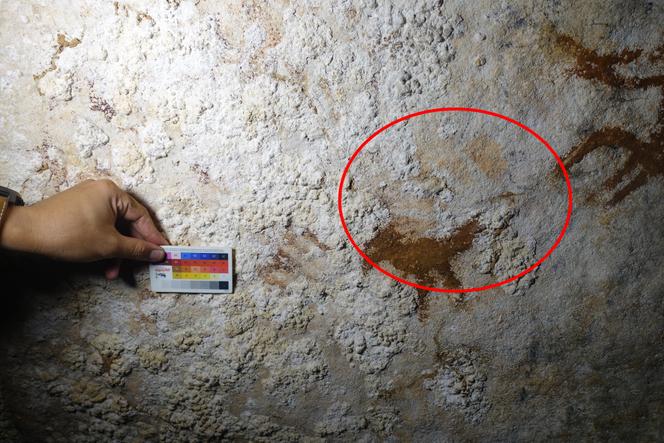
The karst caves on the Indonesian island of Sulawesi have proven to be a treasure trove of cave art. In just over a decade, they have overtaken the European “cathedrals” of prehistoric art, such as Altamira near Santander, Spain (15,000 years old), Lascaux in Dordogne (22,000 years old), Cosquer near Marseille (33,000 years old) or Chauvet in Ardèche (36,000 years old), the latter three of which are located in France. This is not due to the technical sophistication of their drawings, which are less advanced, but rather to their remarkable age.
The latest discovery, described in scientific journal Nature on Wednesday, January 21, is a simple human hand, created using a stencil, its pale imprint faintly contrasting with the ochre outline formed by sprayed pigment. It is partially covered by darker, much more recent drawings of horse riders. Such “negative hands” were stenciled in caves and rock shelters around the world during prehistory, but at over 67,800 years old, the example from Sulawesi is the oldest. As such, it is also the oldest known example of any cave painting.
You have 83.43% of this article left to read. The rest is for subscribers only.


