

Zach Johnson has found a place to live that meets all his needs. He likes to remind people that mentally, he’s fine, but needs help physically completing day-to-day tasks.
“I’m in this box where I don’t fit anywhere except this specific program,” he said.
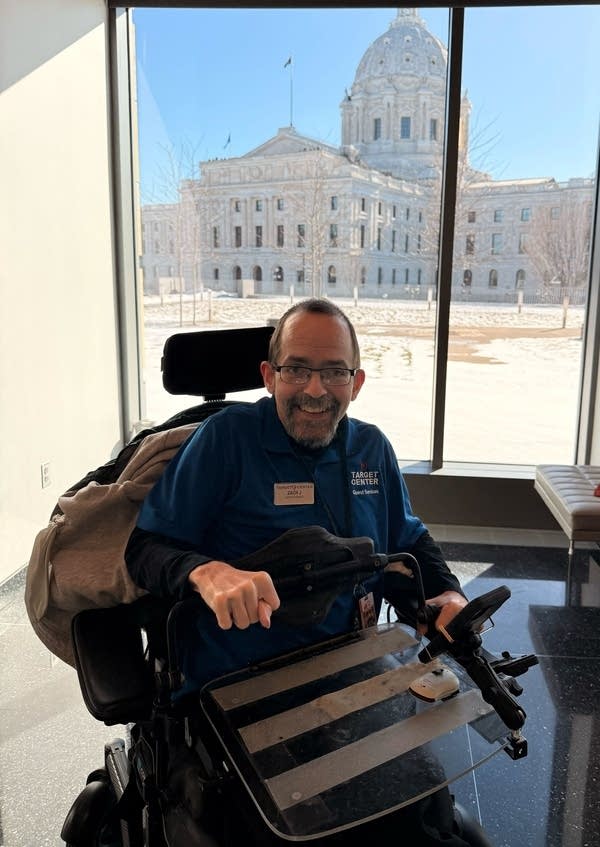
Johnson, who has cerebral palsy, lives in an apartment licensed as an integrated community supports setting. Here, people with disabilities live in their own apartments with staff on site. Residents in these settings typically fall in the gap between assisted living and independent living.
Johnson said it’s exactly what he needs to live as independently as possible.
“When you don’t need [staff], they’re not there. They’re on site, but they’re not checking in on you and all that. I don’t need that,” said Johnson. “When I need to go to the bathroom, come take me to the bathroom. Then get out.”
But integrated community supports, or ICS, is one of 14 programs flagged by the Department of Human Services as being at high risk for fraud. Over the past several months, DHS has implemented a prepayment review process for providers in programs deemed at high-risk for fraud. In some instances, payments to these providers have been paused or suspended.
Johnson has been with his provider for two decades, but still worries where he would go if his provider gets flagged and payments are suspended.
“If anyone wants the services to work for both the taxpayer and me, it’s me,” Johnson said. “If I lose housing and services… I would lose everything I worked for for the last 23 years.”
The stress Johnson has been facing over potential payment suspensions is the subject of hearings this week held by the Senate Human Services Committee. Over the course of the last year, the Minnesota Department of Human Services, which is in charge of disbursing Medicaid funding, has been enacting new policies to combat fraud. In October, DHS implemented a pre–payment review process for 14 Medicaid programs deemed at high-risk for fraud. In some cases, the agency suspended or delayed payments to providers in those programs. At the end of December, the prepayment review process delayed payments to all providers licensed under the high-risk programs for at least two weeks.
Providers say legitimate businesses have been swept up in the process, resulting in payment holds that disrupt patient care and put vulnerable people at risk.
Over the course of two hours on Wednesday, lawmakers grilled officials from the Department of Human Services over whether antifraud measures implemented by the agency have been effective.
The hearings marked Sen. John Hoffman’s return to legislative work after he was shot multiple times last June. Hoffman, who is known as a staunch advocate for social services programs and chairs the human services committee in the Senate, questioned whether the anti-fraud measures had done more harm than good.
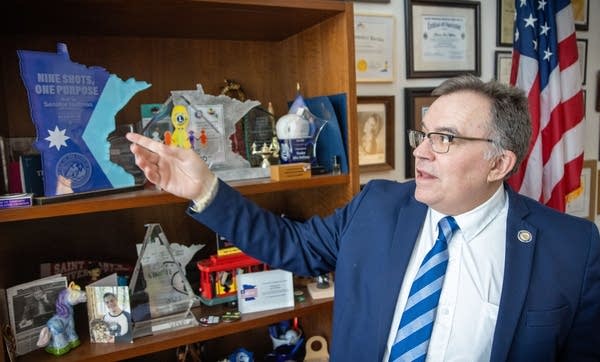
“This committee is simply not asking whether risk exists, we are asking how the department moved from years of identified solutions to a system that resulted in widespread disruption and inconsistency about continuity of care for those receiving services,” Hoffman said.
Temporary Commissioner Shireen Gandhi, Deputy Commissioner and state Medicaid director John Connolly and Inspector General James Clark testified and answered questions from lawmakers. Gandhi said two cycles of 100,000 claims have gone through the prepayment review process and none have been flagged as fraudulent.
But some lawmakers seemed skeptical that the prepayment review process was effective in catching fraud.
“Unfortunately, within those 100,000 claims, I think there probably is fraud, we’re just not catching it. Yet, we’re having disruptions for service providers that we’re hearing about,” said Sen. Jordan Rasmusson, R-Fergus Falls . “I worry that we’re still in that payment spot where DHS can’t tell a good provider from a fraudulent one.”
“I don’t think Minnesota has a problem any different than any other state in the nation,” Gandhi responded. “If you have humans, you have fraud.”
Johnson, who lives in an ICS setting, knows fraud will be a talking point in the 2026 elections. But he doesn’t want Minnesotans to lose sight of the people actually benefiting from services.
“It makes me angry because of how hard I’ve worked to get a job that I want and not be impoverished,” he said. “I feel like I’m stuck between both parties because the liberals just want to throw money at everybody that comes to the door it seems like, and the other side wants to burn the whole thing down. So I’m kind of voting for the lesser of two evils.”
On Thursday, more providers and patients will speak. Johnson said he’ll be one of them.


