

Consensus is emerging in the Minnesota Legislature that a new fraud-fighting office needs to be established in state government. The debate, however, is bogging down over the duties, makeup and budget for the proposed Office of the Inspector General.
The matter turned into a political football last week as Republicans and Democrats split over the authority of the proposed watchdog over state government.
After months of reports of widespread fraud in state government programs, lawmakers came into the 2026 with fraud detection and prevention as a key focus. But just days in, disagreements emerged over the best formula for an Office of the Inspector General.
The Minnesota Senate passed a bipartisan proposal last year to establish the independent office. But the House didn’t vote on it.
So when the session started last week, it was one of the first proposals considered by a House committee. The bill stalled after a Democratic lawmaker sought to amend it on the fly. A Republican effort to suspend House rules to bring the Senate bill to a vote also failed on Thursday.
The bill’s stumble out of the gate highlights a divide over the details — what the office should be tasked to take on and what cast of officials should be responsible for them.
Divide over law enforcement element
After passing the OIG bill through the Senate, DFL Sen. Heather Gustafson of Vadnais Heights and Republican Sen. Michael Kreun of Blaine said they were caught off guard by the changes proposed in the House. Republicans raised concerns about efforts to “gut” the new watchdog office by removing law enforcement officers that they’d like to see within the agency.
“There's no point to creating an office with no teeth. There's no need to create an office just to create an office and say we're doing something,” Kreun said. “The new office must be able to do its job and to do it independently.”
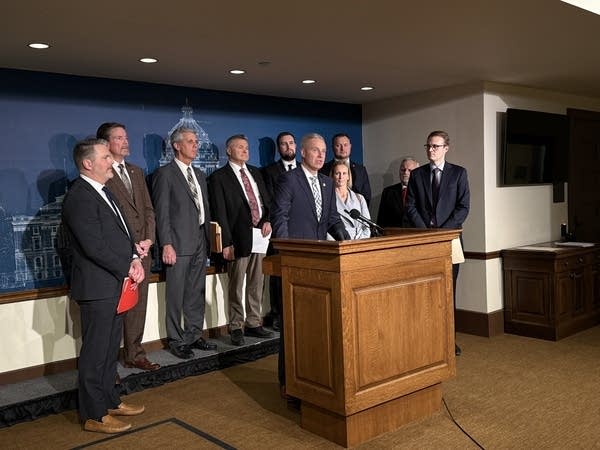
Republican lawmakers said they trust the investigators at the Bureau of Criminal Apprehension who work fraud cases but suggested a future superintendent or governor could influence their work. They also raised concerns about Gov. Tim Walz’s administration not doing enough to stop fraud in state government programs.
Rep. Matt Norris, DFL-Blaine, said the BCA has proven it can handle fraud cases. He said the new office could refer cases to the BCA rather than creating a new stand-alone law enforcement division.
“To say that the BCA doesn't provide adequate investigatory authority is really undermining the professionalism and the integrity of those law enforcement agents in the BCA who are already doing this work,” Norris said. “It only makes financial sense as a state to utilize the expertise of that Financial Crimes Division rather than duplicate it with another small, little law enforcement agency in the OIG.”
There also have been questions about whether federal funding that flows into Minnesota could be jeopardized if it’s subject to scrutiny of a state watchdog. Differences also surround how an office would approach those dollars or if oversight can be delegated to other entities.
And some state agencies already have inspectors general, so a watchdog over all of the state government might have to interact or defer to them.
The Senate bill’s authors said an office could cost between $8 million and $9 million to launch.
More money would be needed down the road, with the amount depending on the number of lawyers, law enforcement officers or other staff. Its supporters said part of that would be offset by money returned to the state from restitution in fraud cases or from fraud prevention.
For context, the Office of the Inspector General within the Department of Human Services receives about $43 million a year for its various functions.
‘Stalled but not dead’
With three months of legislative session ahead, lawmakers have time to finetune the office proposal. Walz has said he would sign it if it reaches his desk.
Lawmakers leading fraud-prevention efforts from all four legislative caucuses said they’re willing to keep working on a compromise.
“I would say the bill is stalled, but not dead,” Gustafson said. “We're early on. What are we on day two, three of the session? So still plenty of time to keep working.”
Rep. Jim Nash, R-Waconia, had a similar take. He suggested he could bring up a bill more closely-aligned with the Senate version when he has the gavel in the State Government Finance and Policy Committee.
“If you've ever watched ‘The Princess Bride’, you know that it's only mostly dead, it's still partly alive,” Nash said. “So we have the ability to bring the bill back into committee and talk about it.”
Partisan disagreements about a final product — especially in an election year when all 201 legislative seats are on the ballot — could complicate its path.
A variety of additional fraud prevention measures are also in the mix this year. Lawmakers have proposed unannounced site visits for providers that receive state funds, requiring pauses to government programs if funding balloons by a certain threshold in a short period of time and creating criminal penalties for falsifying paperwork for audits, among others.

