

Danielle Kondziolka is a mental health professional and the parent of two young boys, ages three and four. Her husband is a state trooper. Despite both of them having stable jobs, Kodziolka said finding affordable child care where they live in Bemidji has been a struggle.
“We've done everything right. We built our careers. We waited till our 30s to have our kids. And then the math really hit us,” she said.
Kondziolka made her remarks during a Bemidji stop of a tour highlighting the need for child care investment in Minnesota. Called the “Child Care is Community Infrastructure Road Tour,” its itinerary paired lawmakers and child care leaders with community members.
Its goal was to facilitate dialogue between the groups, while rethinking how child care affordability and accessibility is approached. Child care can be hard to find, and the costs now rival and even exceed those of college tuition in the state.
The tour was coordinated through the initiative, "Kids Count on Us," a coalition of more than 500 community-based child care centers in the state.
Child care as infrastructure
An aim of the tour was to promote the idea that child care is as vital as infrastructure like roads and bridges.
"When we think about schools, when we think about health care, these are some of the backbones of our society,” said Rep. Jamie Long, DFL-Minneapolis. “What I think the organizers today are trying to convey to us, and that I agree with, is that child care is a part of that infrastructure of our state too. It's a part of the social fabric."
Long was joined on the tour by fellow members of Minnesota House of Representatives, Rep. Pete Johnson, DFL-Duluth, and Rep. Carly Kotyza-Witthuhn, DFL-Eden Prairie.
“A lot of people treat child care like a commodity,” Johnson said. “The reality is, it is kind of one of those main gears that keeps our communities going and keeps everything turning.”
Darren Laesch, a civil and transportation engineer with the Department of Transportation, pointed out how much a child care shortage affects employers, too. He's lived in the Bemidji area for 21 years, and is himself a father of five. And he said his workers often struggle to find child care.

“Over half my team have children under 12, so they need child care through the summer or when school is not in session,” he said. “And I'm hearing a lot of instability.”
Laesch said with Minnesota’s population aging, finding workers is getting harder. He said having better child care options would help them retain and recruit workers.
“That's just not my organization, that's every small business, every manufacturer,” Laesch said. “I think all of you know someone, an organization that's struggling to find people, and we need to define this. This is a way to help that problem.”
Tough choices: Quit working or have unaffordable child care
Finding child care has dogged Sarah Peloquin and her husband. They were excited to move home to Minnesota to raise a family after a stint in Iowa. Today, they live in Bemidji and have two little girls.
When they first returned to Minnesota, the young parents — who had a 10-month-old at the time — struggled to find child care because of their daughter's young age.
“We were having conversations of whether I might have to stop working,” she said. “Or maybe he would have to delay his new job.”
Following a brief stint with an in-home provider, they eventually enrolled their daughter in Pine Pals, which specializes in caring for kids of all ages. Now, almost three years later, and another daughter stronger, the family wants to expand. But they're asking themselves if they can afford it.
"And a lot of the times, it's ‘No,’” Peloquin said. “We both have pretty good jobs, pretty good careers, but it's still a challenge when we're talking about child care tuition.”
One of the solutions put forward on the tour was to build more partnerships between businesses and child care providers.
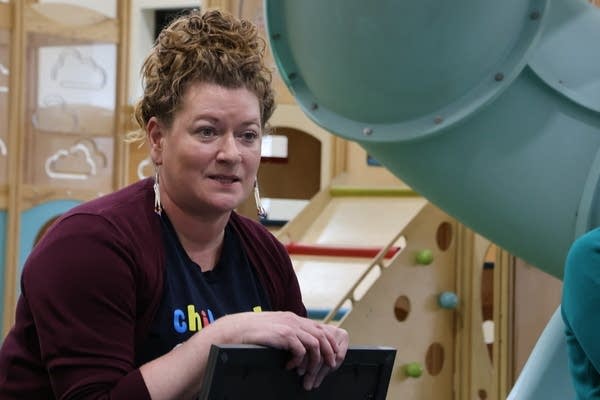
But Lydia Pietruszewski, co-founder of Pine Pals, said ultimately, they need help from the state.
“Something that I've been thinking about a lot is how in this industry, especially on a day-to-day basis, we are scrounging up resources where we did not think they existed to fulfill needs,” she said. “So, that is something that I would call on lawmakers to do right now, is see these needs and find the resources to fund what we need.”
Gov. Tim Walz’s supplemental budget plan included a proposal to boost the child care tax credit. But legislative leaders say it’ll be a tough lift in a light budget year.

