

If you log into prediction markets like Kalshi or Polymarket today you could wager on whether Iran will conduct a nuclear weapons test this year, who will win the Masters Tournament and when Taylor Swift will get married.
The online markets offer opportunities to stake claims on countless future events – from the mundane to the mainstream to the macabre. They’ve taken off in popularity and they generate billions of dollars in transactions.
Minnesota lawmakers say the sites have bypassed state gambling laws and created some legal gray areas around who can participate. They’re aiming to make it a felony to host or advertise a prediction market here.
“In addition to circumventing state regulations on gambling, prediction markets open up placing bets on almost anything from elections to wars to natural disasters,” Rep. Emma Greenman, DFL-Minneapolis, said, “and by allowing anonymous bets on war policy in some cases, it creates an enormous ethics concern. It also makes these markets vulnerable to cheating and manipulation by anonymous insiders.”
Predictions on the sites are not considered bets in the traditional sense because they involve buying or selling contracts among site users. And that’s what’s made the markets tough to clamp down on.
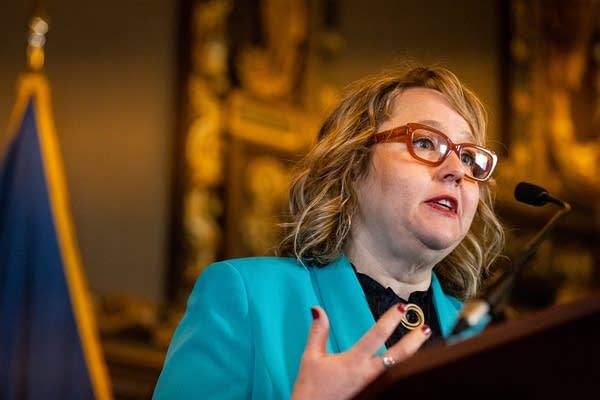
Greenman said Minnesota should act quickly to mitigate potential harm.
“In the last year, we have seen the explosion of this,” Greenman said. “I do think if we wait another year, the negative public health impacts on teenagers, particularly but also the disruption that it has to our legal framework that we regulate gambling on, will be pretty extreme.”
At a House Commerce Committee hearing on Thursday, the Minnesota Family Council, Joint Religious Legislative Council and Freedom Foundation of Minnesota spoke in favor of reeling in prediction markets.
“Prediction markets are the wild west of gambling. It's virtually unregulated, and should be considered illegal under Minnesota's existing gambling laws,” said Freedom Foundation of Minnesota CEO Annette Meeks.
After discussing it on Thursday, the House Commerce Committee set Greenman’s bill aside for now. The Senate State and Local Government Committee advanced a companion bill Thursday on a voice vote.
Some legislators say it’s a fight Minnesota isn’t best suited to pick.

Rep. Nolan West said he agreed the markets are concerning but he worries about litigation that other states have encountered when trying to constrain the platforms. Judges are weighing cases from Arizona to New York and other states in between.
“Perhaps they would rule that the states have the right to regulate it,” Blaine Republican said. “Until that happens, all we're doing is engendering taxpayers to pay for litigation costs that we very likely will lose if any recent court case is determining it.”
The Commodity Futures Trading Commission is behind some of the lawsuits, arguing the federal government has jurisdiction to put up guardrails, not the states. The companies themselves have lodged lawsuits, too.
The proposal has bipartisan backing in both chambers. That’s important because any bill needs support from both parties to pass the narrowly split Legislature.
“I think this is something we do not want in Minnesota,” bill sponsor Sen. John Marty, DFL-Roseville, said. “And so this bill would clarify that our law on bets that these types of futures contracts would be illegal under our laws, which I think they are. But this is clarification.”


