


County workers who administer federal safety net programs such as SNAP and Medicaid are looking forward to a slightly easier work load in the coming months, now that the Minnesota legislature has allocated $90 million to upgrade the outdated technology they use.
State lawmakers struck a budget deal that includes the funding needed to overhaul Minnesota’s social services computer systems that some say are from the “Oregon Trail era.” For those who don’t remember when that game was popular, the MAXIS system that counties use was new at about the time the Minnesota Twins last won the World Series. That was 35 years ago.
The package also includes $15 million to improve technology designed to help state agencies detect fraud in social services programs. The technology funding bill passed during the flurry of action during the Minnesota legislature’s final hours last weekend, receiving broad bipartisan support in both chambers. Gov. Tim Walz is expected to soon sign the bill.
County workers said they’re both relieved and pleased with the deal that was reached.
Emily Mumford, a human services financial supervisor for Blue Earth County, said she hopes that the technology upgrades will make administering benefits more streamlined and efficient.
“I think there’s a lot of opportunity from where we’re at now to where we could go in terms of technology,” she said. “Our partners at the state and lawmakers have done a good job listening to what counties are saying and what we need.”
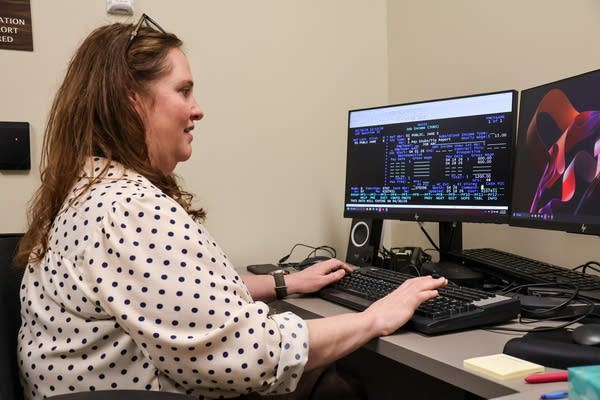
Mulford walked MPR News through the tedious and time-consuming process of entering information to determine if someone qualifies for Medicaid and SNAP food assistance benefits and meets new work requirements imposed by the “One Big Beautiful Bill” act Congressional Republicans passed and President Trump signed into law last summer.
“What I'm doing is updating what someone's job information is,” Mulford said as she painstakingly tapped on her keyboard. “So this would be a place where we record how much they make, how often they get paid, any information that's needed to determine eligibility.”
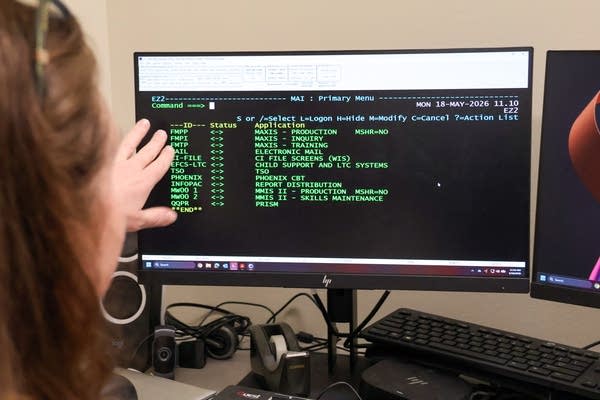
Mumford showed us how she must mind-numbingly enter and reenter the same data several times into different fields in the antiquated MAXIS system.
“They haven't been able to get this system updated, so every time a worker has to do that, they have to go through an extra set of manual steps to make sure the eligibility is correct. That makes more room for error because the staff have to remember that there's a set of extra steps.”
Employees must double- and triple-check everything they enter; all that extra time laboring over a keyboard and computer screen costs taxpayers more money.
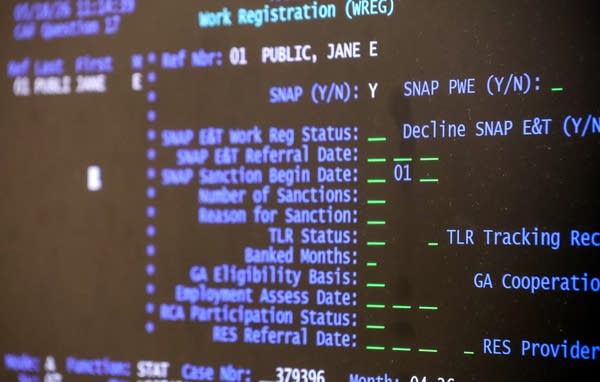
"It's frustrating for workers, it's time-consuming for workers," said State Rep. Paul Torkelson, R-Hanska, as he advocated in committee for passage of the IT bill last weekend. "And it means that it's hard to keep employees in place. What young person would like to sit down in front of a green screen and watch the wheel of death for a while before they can even enter an address the first time? And in many of these applications, they have to enter the same address three or four times."
The bill lawmakers ultimately passed also establishes an ongoing technology fund for counties and tribes so they don’t have to wait decades for the state to appropriate more dollars to make future upgrades. And the legislation will establish the Human Services Modernization Advisory Council and a legislative commission to lead statewide technology revamps.
Julie Ring, executive director of the Association of Minnesota Counties, said that while the funding is welcome, the effort to modernize the technology counties use will take some time.
“Even the fastest short-term stuff, we’re still talking [about] in the scheme of a couple years,” Ring said. “There are some things that we think can be fixed in the system today quickly, but a lot of it is going to take planning.”

Many counties around the state struggled with increased workloads navigating the outdated systems, as the federal government shifted more of the administrative burden onto states and counties while, at the same time, slashing funding for the programs.
Counties said it took more employees and more time to comply with new requirements for safety net programs, so the need to update the antiquated technology was urgent. Some raised concerns about needing to raise property tax rates to cover the increased administrative costs or cut services, such as reducing how often they plow snow and cutting public library hours.
However, Ring said there are lessons to be learned about investing in the infrastructure that helps administer benefits to the residents who rely on them.
“We have to think about how all of us, together — federal, state and local — can be delivering the best services the most efficiently to Minnesotans,” she said. “When there are changes, the ripple effect through all the levels of government and all the workers who touch those things is complicated and messy and something that we struggle to figure out the best way to make policy around.”

MPR politics fellow Cait Kelley contributed reporting for this story.