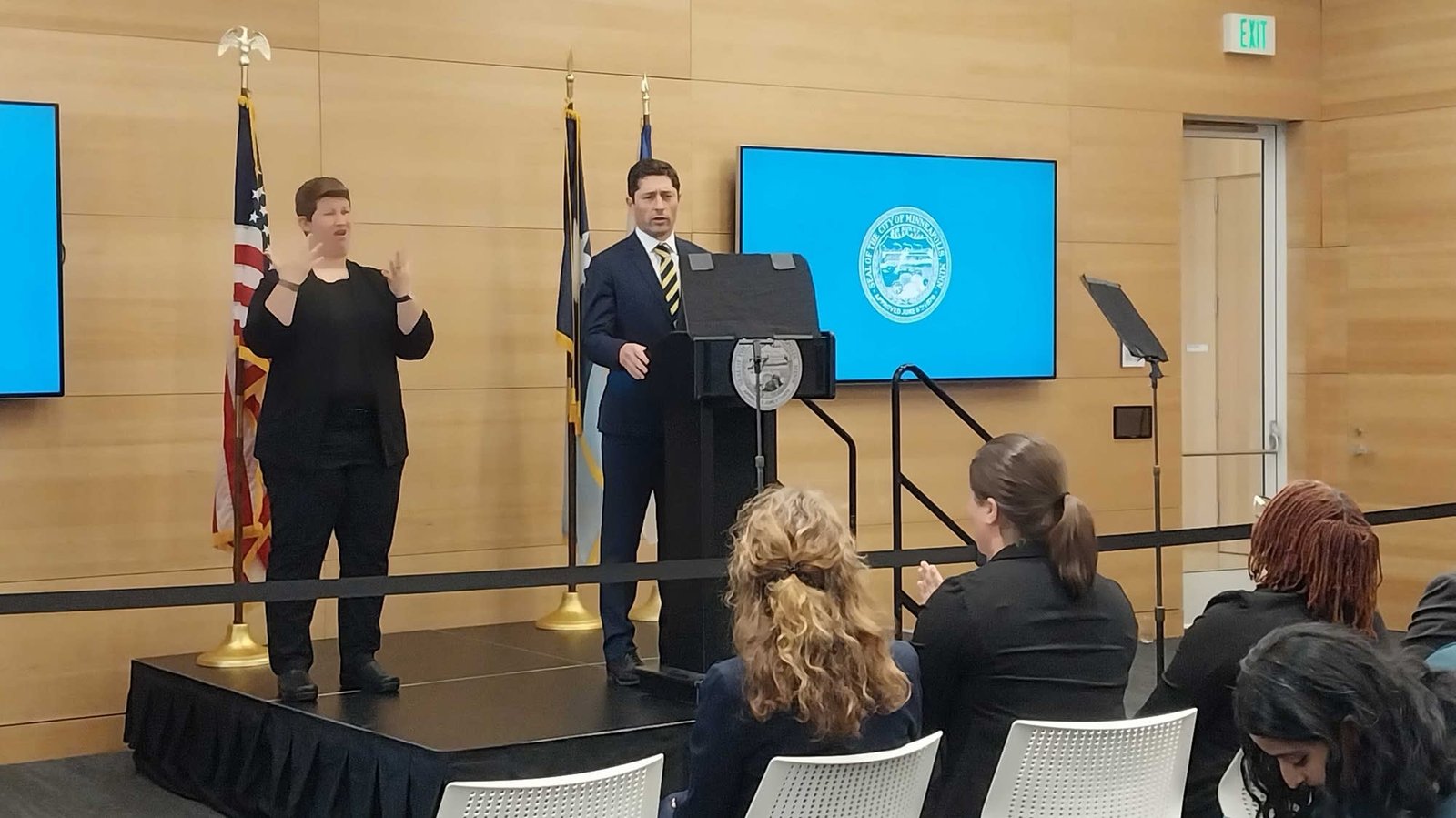
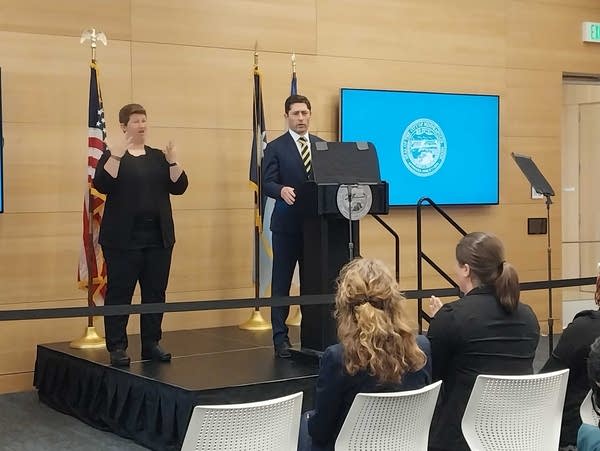
With a budget gap looming, Minneapolis Mayor Jacob Frey is proposing a plan to cut spending and staffing across city departments — and hike property taxes by 11.3 percent next year.
The proposed $2.6 billion budget for 2027, which Frey outlined in an address Wednesday morning, also adds funding for police overtime and recruitment, fire department hiring and some community safety projects.
In his address, Frey said the proposal is a result of significant financial challenges.
“This budget reflects our values, and at this time, the primary value is stewardship,” Frey said. “Such stewardship requires difficult decisions, painful choices, and telling the truth about what it actually costs to run a city, especially when assistance from other jurisdictions is questionable.”
The city started the budgeting process with a revenue shortfall of more than $30 million — plus, Frey said the 2027 budget will need to add about another $30 million in spending to keep up basic city services. The city’s finance staff said the gap is largely due to increased costs to pay city employees, and higher costs for fuel and maintenance.
Minneapolis also spent millions responding to the federal immigration enforcement operation last winter. And Frey said the city is also budgeting around the potential loss of some federal funding.
To close that gap, Frey’s budget proposes cutting about 100 staff positions at the city. That includes leaving some empty positions unfilled. The city is already under a hiring freeze, with limited exceptions. City budget officials said they hope leaving those positions empty reduces the need to lay off workers.
Frey said the city will also save money by consolidating some departments. The Racial Equity, Inclusion and Belonging department will become part of the city’s human resources department; several other offices will combine.
Frey said he’s also in talks with the Minneapolis Park and Recreation Board about areas to consolidate. He pointed to duplications of the city’s work — for example, the park board has its own human resources department and payroll. City and park board officials are negotiating potential structural changes.
Frey said the city is cutting back carefully, but he expects some pushback.
“I am certain the two biggest critiques of this budget will be that the cuts are too deep, and that they aren’t deep enough,” Frey said.
Increased police budget
Frey’s budget proposes additional funding for some departments, with the biggest increase — $20.5 million — going toward police.
The bulk of that new funding — $13.1 million — is for overtime spending. The department overspent its overtime budget this year by $23 million, and by a similar amount in 2025. That was far over the office’s $2.3 million overtime budget for 2026. Frey said that spending was needed to keep officers on the streets and on standby, particularly during the federal immigration enforcement operation.
The increase in the 2027 budget does not indicate an actual increase in spending, Frey said — instead, it’s a more accurate budget for what the department spends.
“Our overtime allocation of $13.1 million is a transparent attempt to correct the mismatch by aligning our financial plan with the department’s operational reality,” Frey said.
Frey said cutting back on overtime hours isn’t an option.
“With 656 sworn officers — fewer per capita than almost any major city in the country — basic services expected by our residents require the use of overtime as a tool,” Frey said.
Some city council members and residents have criticized the department’s overspending.
City Council President Elliott Payne said he’s open to increasing the budget to get closer to what the department actually spends on overtime. But he said he wants to review that spending and the overtime hours used.
“What we need is a different type of conversation around what’s the right level of service, how should we fund it, what should we be trading off to fund that service — and making sure that there’s collective scrutiny on how we’re delivering that service,” Payne said.
Frey said police and city leaders have also reviewed the overtime spending and are looking for ways to cut back where possible. He’s also looking to hire more officers, which he said will cut back on the need for overtime work.
The remaining additional money for the police department is going toward recruitment and officer pay. Frey said the department has also reduced costs in some areas.
Another $2.3 million will go toward community safety ambassadors, a pilot program that the city plans to continue. The ambassadors are city employees who patrol specific corridors to perform wellness checks and offer help to residents. That funding will cover 23 new employees.
But the budget proposes significant cuts to the violence interrupter program, another non-police neighborhood safety initiative. That program contracts with workers from local organizations to provide violence interruption services. The budget proposal cuts $2.6 million from the program — more than half its previous budget.
The proposed budget also allocates funding for additional firefighters, a social worker in the city’s 911 office, affordable housing projects and contracts related to the city’s work on its settlement agreement around police reform.
Additional new spending is distributed among several departments. Frey said the city is looking to cover essential services, and work previously funded by grants that have now expired.
Proposed property tax increase
Frey’s budget proposes an 11.3 percent property tax increase. That comes out to about $409 per year, or $34 per month, for the median-value homeowner.
It’s a much steeper hike than the city predicted in its financial plan last year, and it’s higher than the city’s average annual property tax increase since 2018 of 7.7 percent.
Council member LaTrisha Vetaw said that’s going to be hard on constituents.
“That double-digit levy increase is a shocker,” Vetaw said after the mayor’s budget address. “I represent a community that… folks are living paycheck to paycheck. That number I always wanted to be as low as possible.”
Frey said he’s optimistic about the city’s future, in spite of the current budget gaps. He pointed to increased occupancy rates in downtown buildings in 2026, and more big events coming to Minneapolis.
“The difficult decisions we’re making in this budget reflect where we’ve been — not where we are and certainly not where we are headed,” he said.
Frey’s proposal kicks off the city’s budgeting process. The city council will now have a chance to propose changes and take public input on the budget. The council plans to hold several public hearings, including some around the city outside of City Hall. Council leaders said they hope that makes it easier for constituents to attend and weigh in.
The council and the mayor will have to agree to a spending plan — and tax levy — by the end of 2026.