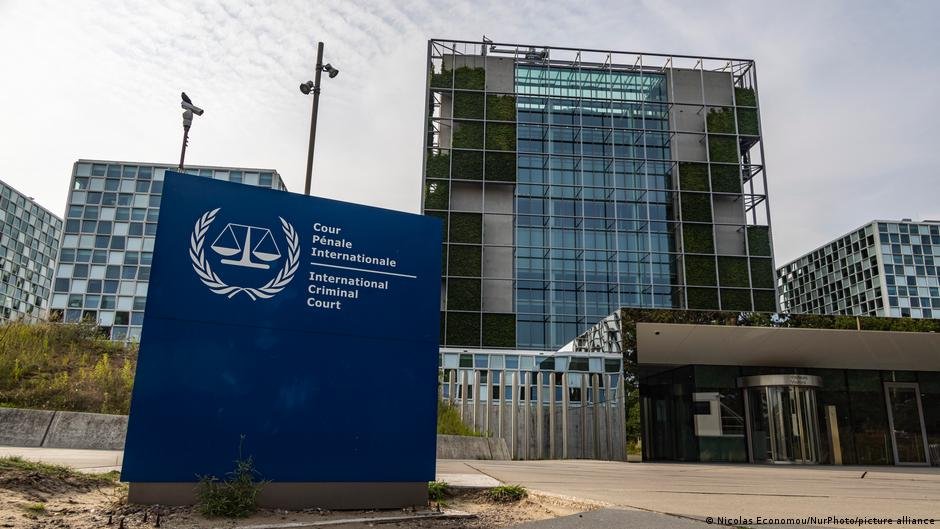
US Secretary of State Marco Rubio took aim at the International Criminal Court (ICC) on Tuesday, calling it “corrupt and fatally politicized” and claiming it has “maliciously abused its authority and exceeded its mandate.”
He announced sanctions against the ICC president, Tomoko Akane of Japan, and senior trial lawyer Abdoulaye Seye of Senegal. The sanctions include freezing of their US-held bank assets and largely cutting them off from the US financial system.
The ICC has been holding individuals accountable for war crimes, genocide and crimes against humanity since 2002. The court is based in The Hague, just like the International Court of Justice (ICJ), which is part of the United Nations and settles disputes between states.
Unlike the ICJ, the ICC has 125 members, not all 193 UN member states. The US, Russia and China are among the countries that have not joined, along with several states in Asia and North Africa.
Rubio had recently threatened to dismantle the court “brick by brick.” In a statement in July, the State Department outlined a number of measures Washington is considering as part of its campaign against the court. These include visa restrictions on ICC staff and tougher sanctions targeting the court and affiliated organizations. It also suggested increased scrutiny of countries “that refuse to reject the ICC’s illegitimate authority” while continuing to receive US assistance.
The US has clashed with the ICC before. But legal experts around the world say Washington’s latest escalation marks a significant shift.
How Washington is piling pressure onto The Hague
“What the US and Marco Rubio have now essentially done is make public something that has been going on for more than a year,” Andreas Schüller, co-director of the International Crimes and Legal Accountability Program at the European Center for Constitutional and Human Rights (ECCHR) in Berlin, told DW in July.
“The US has been using various forms of diplomatic pressure against other countries in an effort to change their positions, and in some cases their voting behavior, toward the ICC,” he added.
“The fact that it is now being declared a campaign shows that it is being pursued strategically, that it is broader in scope, and that other countries — including those that are not ICC members — are also being brought on board to help apply pressure.”
A court to ensure no perpetrator can escape justice
The US is not a member of the International Criminal Court, meaning crimes committed on US soil do not fall under its jurisdiction. But the ICC can prosecute alleged atrocities committed in member states — a principle that led, for example, to arrest warrants being issued for Russian President Vladimir Putin and Israeli Prime Minister Benjamin Netanyahu.
The ICC has its roots in the lessons of history. The Nuremberg trials after World War II, which put leading Nazi figures on trial, marked the birth of modern international criminal law. After war crimes tribunals were set up in the 1990s following the conflicts in the former Yugoslavia and the genocide in Rwanda, calls for a permanent court gained momentum.
For Kai Ambos, an international law expert at the University of Göttingen, the issue comes down to “the fundamental question of accountability” — whether in Ukraine, Iran or Gaza.
“It cannot be that such serious crimes are committed, regardless of the conflict, and those primarily responsible — above all government leaders and other figures in power — go unpunished. Nothing happens. That is unacceptable for victims, but ultimately for all of us,” Ambos told DW before the recent US sanctions.
Should US citizens be in the dock?
In a short video address in July, Rubio said the court posed a threat to the entire US legal system.
“Border Patrol agents removing violent criminals from our country. American Marines risking their lives to defend our nation. … If we do nothing, they would all be left at the mercy of foreign judges thousands of miles away,” he said.
No case against US citizens is currently pending before the ICC. The actions of US Immigration and Customs Enforcement officers take place largely on US territory, where the court has no jurisdiction.
The situation is different when it comes to the targeted killings of alleged drug smugglers in the Caribbean: Former ICC prosecutor Luis Moreno Ocampo described them in November as potential crimes against humanity.
How can the court withstand the pressure?
Ambos fears that the so-called “chilling effect” could intensify — meaning, for example, that ICC prosecutors might become more cautious when dealing with US suspects. “And then there is the problem of overcompliance with sanctions — meaning that companies outside the US may also say: We will no longer work with the institution because it could put our business in the US at risk.”
In 2025, the US State Department had already imposed a series of sanctions on the ICC and individual judges. The court responded by reducing its reliance on the US, replacing, for example, Microsoft Office software with a German open-source alternative.
ECCHR expert Schüller sees many small ways for member states to support the court. “If medium-sized powers and smaller states join forces against the US and come together as a pillar of support for international institutions, pushing back against this pressure, then that is the most important thing,” he said.
The EU backed the ICC immediately after Rubio’s previous threats in July. German Foreign Minister Johann Wadephul also defended the court, saying it makes the world “safer and more just.”
Ironically, the US Senate held a similar view in 2022, following Russia’s full-scale invasion of Ukraine. In a resolution, it described the ICC as “an international tribunal that seeks to uphold the rule of law” and welcomed its investigations into Russia. One of the co-sponsors of the resolution, introduced by the late Republican Senator Lindsey Graham, was none other than current US Secretary of State Marco Rubio.
This article was originally written in German. This version was originally published on July 17, 2026, and updated on August 19, 2026, to reflect the recent US sanctions.