
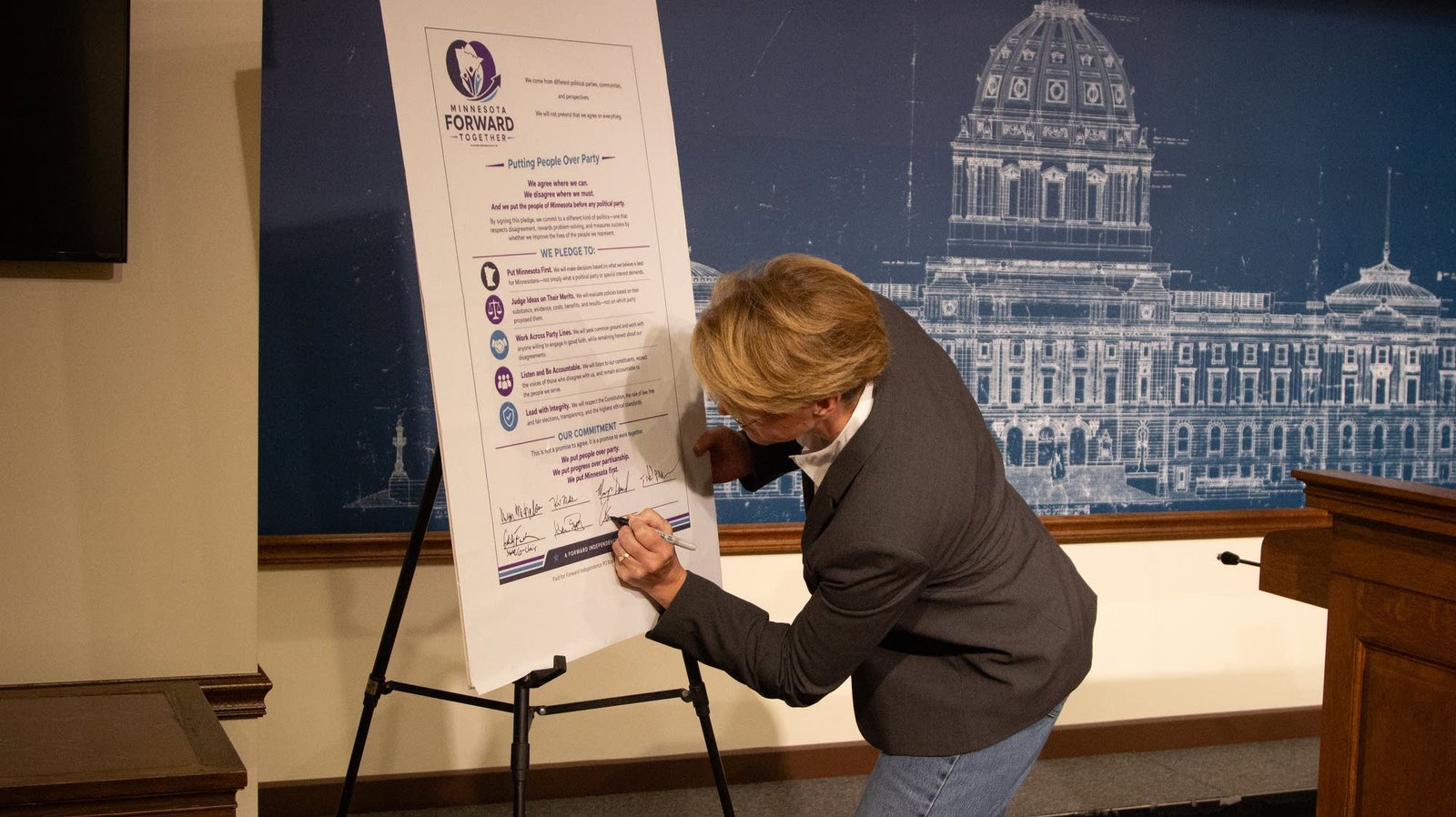

The Forward Independence Party is trying a new strategy to break into Minnesota’s political mainstream and capitalize on high voter discontent with the two-party system by making alliances with candidates running under major party banners.
It's a building-block approach that recognizes the difficulty third parties face making it to a bigger stage. Recent law changes make that hill even higher to climb.
Forward Independence — which can trace its roots to Jesse Ventura’s Reform Party — launched a coalition this month to boost centrist candidates and break into the political conversation. At its Capitol launch, the coalition was made up of seven state House and Senate candidates from different parties who commit to working across the aisle if they get elected.
“Today we are working to prove something that too many people in politics seem to have forgotten: Minnesota is bigger, should be bigger, than political parties,” Forward Independence Co-Chair Phil Fuehrer said.
“We're not creating another political caucus. We are creating something that the people of Minnesota desperately need: a willingness to put the public interest ahead of the partisan interest,” Fuehrer added.
Across Minnesota, this year’s ballots have 13 candidates who are listed as unaffiliated independents or are aligned with a third-party. Six are after legislative seats, one is running for Congress, two for the U.S. Senate and the rest for one of the executive roles in state government.
Absentee voting in the general election starts Sept. 18.
Minnesota voters have traditionally been more willing to support third-party candidates than the national average. Minnesota’s version of the Democratic Party, the DFL, is the result of a merger with the state’s Farmer-Labor Party in 1944. Later, in 1992, economic populist Ross Perot got almost 24 percent of votes in Minnesota in a year when Democrat Bill Clinton won the state with 43 percent of the vote.
Most famously, in 1998, an ex-pro wrestler and Reform Party candidate named Jesse Ventura made international news by defeating well-known DFL and Republican nominees to become Minnesota governor.

However, Ventura exited after a single term and left his party, later rebranded as the Independence Party, in search of a next act.
In the next three elections, the party had candidates with solid credentials: Tim Penny, Peter Hutchinson and Tom Horner. They were viewed as factors in governor’s races decided by slim margins but none could replicate Ventura’s recipe of charging through the middle to victory.
The Independence Party held onto major party status until after a disappointing showing in the 2014 election.
The road back has been difficult.
"The major parties are starting on third base and third parties have a very very difficult path," said Chris Chapp, who teaches political science at St. Olaf College.
Chapp said voter dissatisfaction, especially among young voters, with the two major parties opens the door a crack for third parties, but not as much as people might think.
“Even though Americans want third parties, there's not agreement on what that third-party option looks like,” Chapp said.
In 2024, the DFL-controlled Legislature made things even harder for third parties after several pro-marijuana parties gained political ground. Previously, among other requirements, minor parties could gain major party status if one of their statewide candidates won at least five percent of the vote. Now the threshold is eight percent.
Candidates of major parties can tap into significantly more state campaign funds than minor parties and, most importantly, they get automatic ballot access. Today, only the DFL and Republican Parties are considered major parties in Minnesota. The minor parties are: Grassroots-Legalize Cannabis Party, Minnesota Legal Marijuana Now! Party, Libertarian Party of Minnesota and Forward Independence.
There are independent and third-party candidates in many statewide and downballot races this year, including the Green Party’s Steven Young in the governor’s race.
The Forward Independence strategy has been a bit mix and match. While it is fielding some candidates of its own, the party is also establishing ties with candidates associated with other parties.
Coalition member and DFLer Tara Killen is running a longshot campaign against a Republican state senator in central Minnesota. Killen said she worries about backlash from the DFL.
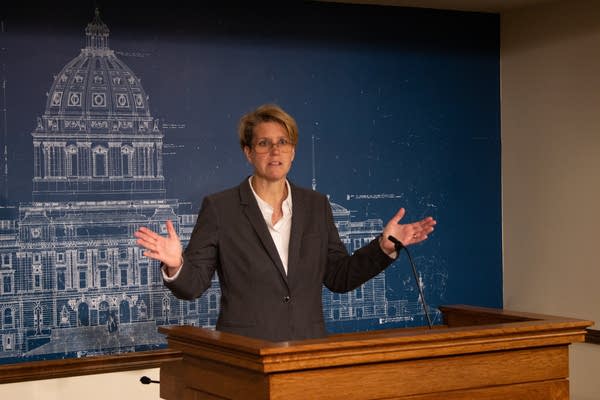
“Basically we all but vomited to come into this room because of what we're about to face when we leave it,” she said.
However, Killen said she committed to the coalition because she believes voters want bipartisanship.
“I think people are sick and tired, based on what they have said to me when I'm out on the campaign trail. They are sick and tired of politics,” Killen said. “I'm not going to be political. I'm going to represent the people in a political arena. There's a difference.”
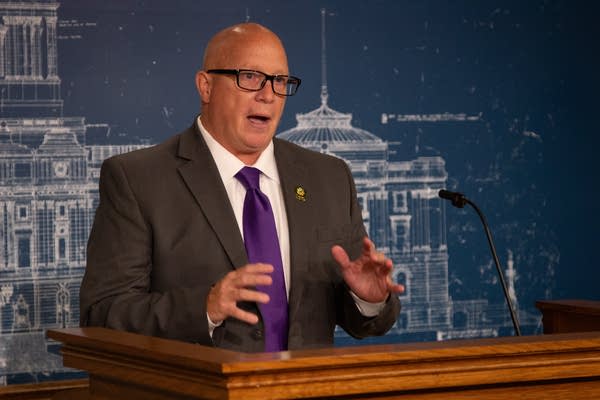
This coalition could earn Forward Independence public attention. However, the party has a candidate in the state auditor’s race, Jay Reeves. His race is the only one that could earn Forward Independence major party status.
“I couldn't be more proud of these people to take this leap of faith in building a coalition,” Reeves said at his party’s press conference.
“There's a giant section of Minnesotans that are feeling disenfranchised. Right, left. What about those folks that are feeling unheard? We're tired of it,” Reeves added.
The 2022 auditor election was decided by less than one percent of the vote, with a pair of marijuana party candidates also on the ballot. Reeves could affect this year’s election outcome even if he doesn’t win as early polling shows another close race for the open office.
“In a close race, and especially a local contest where a thousand votes here or there could really make a difference, third-party voters have that potential to siphon off votes and then tilt the election,” Chapp said.
Voters wary of the so-called “spoiler effect” are less likely to vote third-party, which makes it difficult for non-major parties to gain a foothold.
“If a party isn't seen as viable, voters don't want to ‘throw their vote away’ in an election that might feel really really high stakes,” Chapp said.
This November the stakes are high. There’s a slate of statewide offices and the entire Legislature on the ballot, and increased political polarization means the consequences for a party losing power are more significant.
“We're not talking about just a little shift in policy” when another party takes power, Chapp said. “That might mean things like congressional investigations into the other party.”
None of that bodes well for the independent and third-party candidates on the ballot in November. But those candidates haven’t lost hope yet. Nor should they, Chapp suggested.
“You could just remind me of Jesse Ventura,” Chapp said, “and then I would have to admit that anything's possible.”


