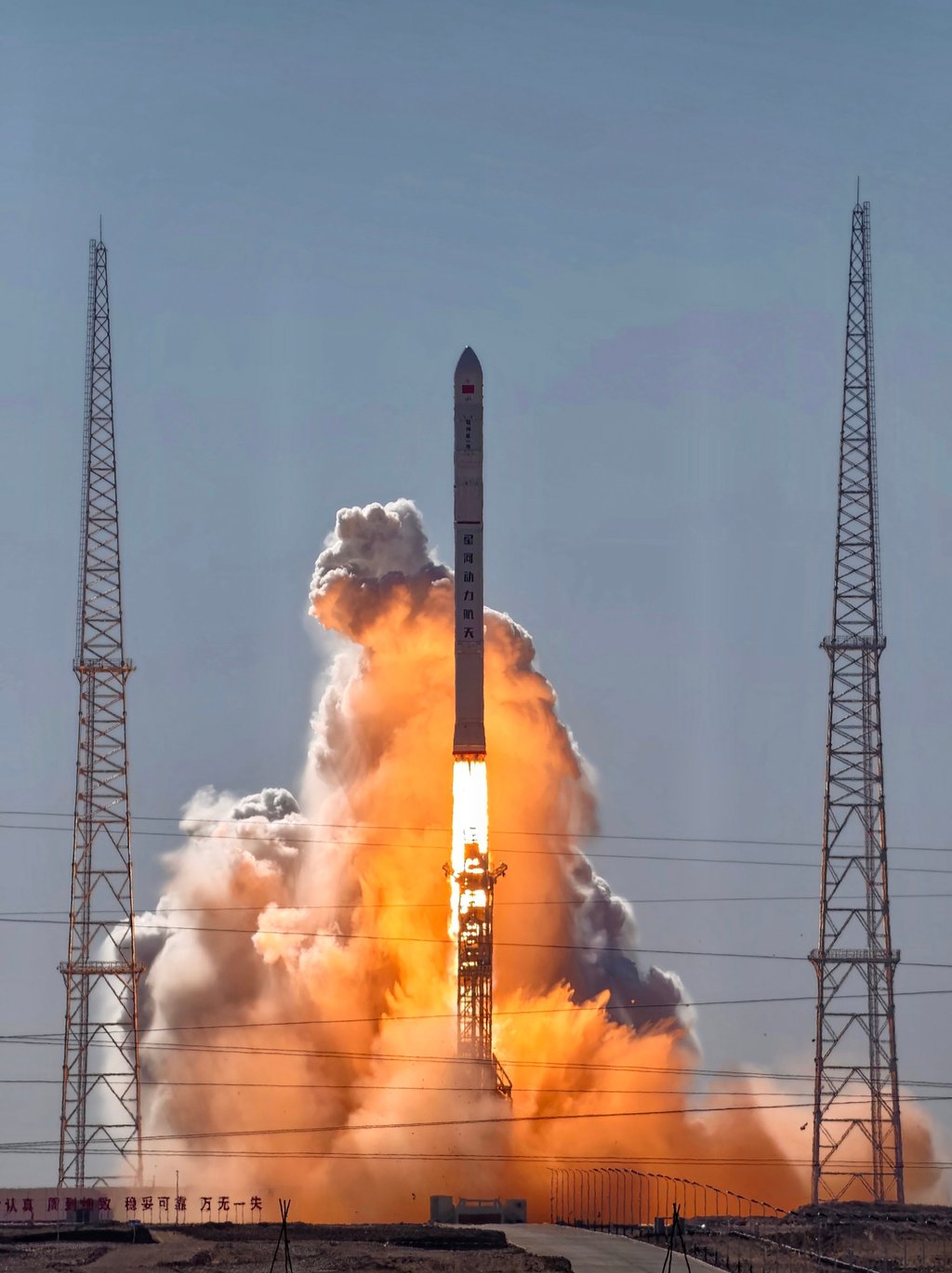
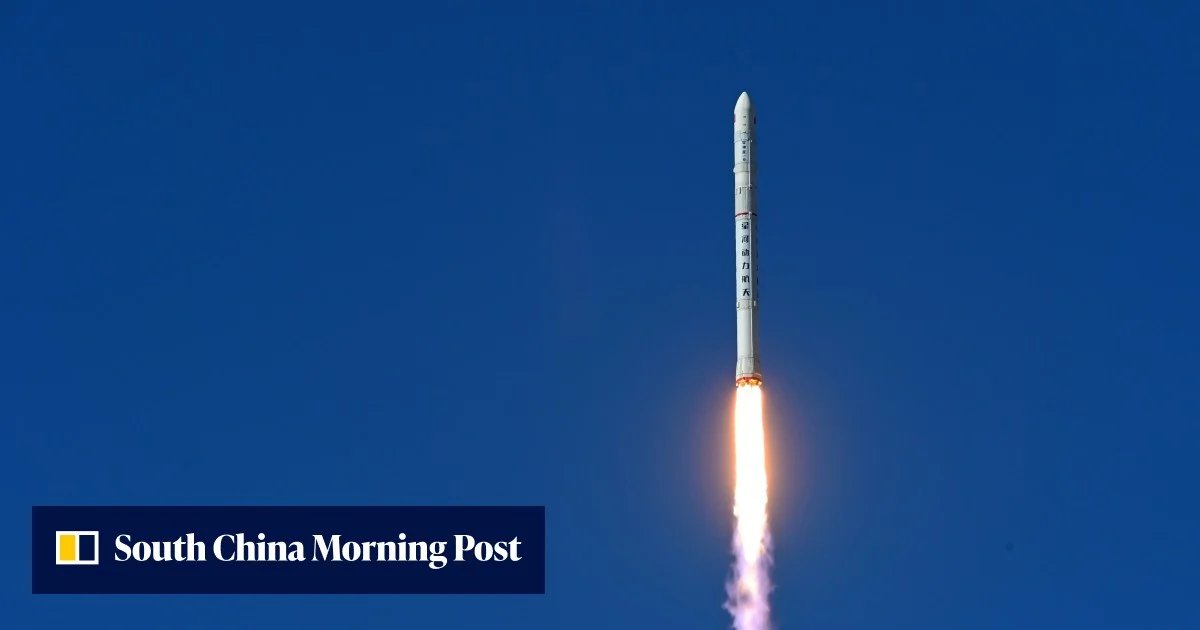
Chinese rocket maker Galactic Energy has successfully sent its Pallas-1 medium-to-large reusable rocket into orbit, marking the latest milestone in Beijing’s drive to develop reusable launch capabilities and narrow the gap with Elon Musk’s SpaceX.
The two-stage, liquid-propellant rocket lifted off at 10am on Tuesday from a self-built launch pad at the Jiuquan Satellite Launch Centre’s commercial pilot zone in northwestern China’s Gansu province before entering its designated orbit, according to the Beijing-based company.
Standing 52 metres tall with a 3.35-metre diameter, Pallas-1 has a lift-off mass of about 283 tonnes and lift-off thrust of 350 tonnes-force. Its first stage is powered by seven in-house developed liquid oxygen-kerosene engines named CQ-50.
The rocket is designed to carry up to 7 tonnes into low Earth orbit and withstand up to 25 flights.
Galactic Energy did not attempt to recover the booster on Tuesday. The company plans to test re-entry control, grid fins, braking and deceleration systems before attempting a full vertical landing – initially aiming for targeted recovery at sea or on land – to pave the way for high-frequency commercial reuse.
The mission aligns with Beijing’s broader push to become a “space power”, an objective enshrined for the first time in the nation’s latest five-year plan.