
Beijing-based GalaxySpace’s deployed what it called China’s first turnkey satellite export to Southeast Asia this week, underscoring the country’s efforts to boost its influence in the space industry overseas amid competition with Elon Musk’s SpaceX.
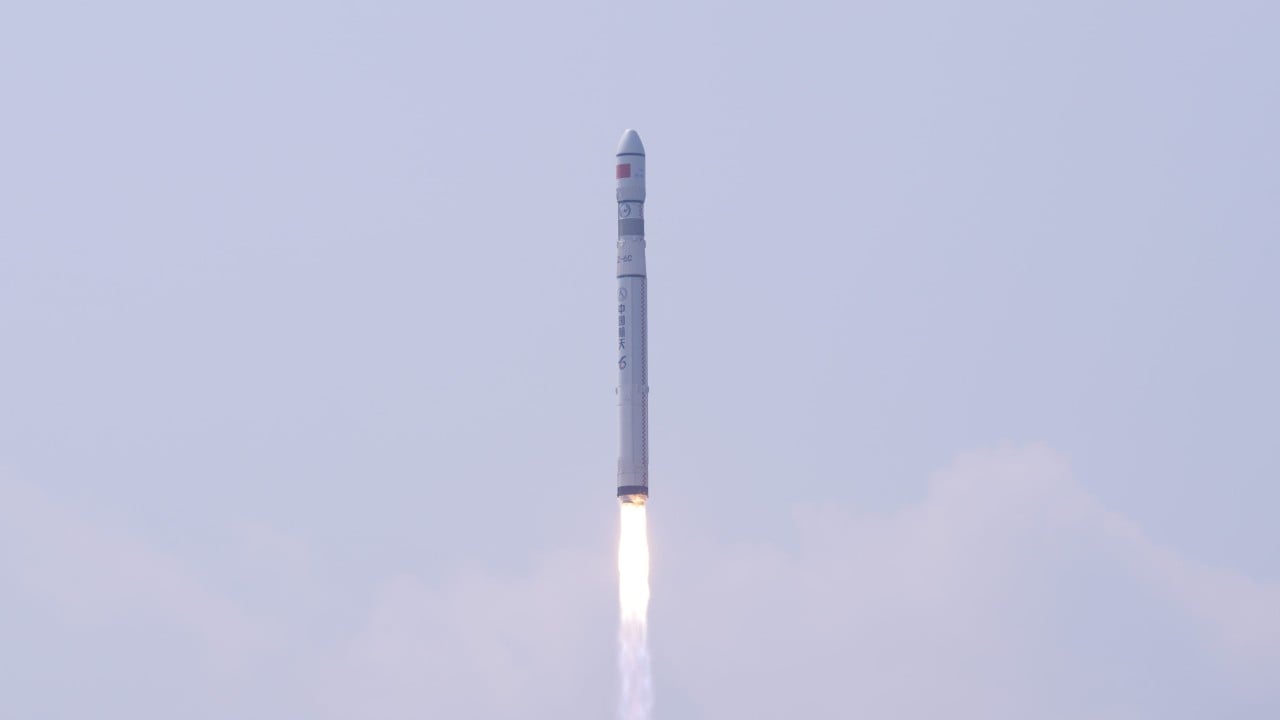
GalaxySpace said it launched the Lingzhi-09 Thailand CubeSat aboard a Long March-6C rocket – alongside six other satellites – from the Taiyuan Satellite Launch Centre in Shanxi province on Tuesday.
Developed for Thailand’s Geo-Informatics and Space Technology Development Agency (GISTDA), the CubeSat satellite will collect remote-sensing data for land, agriculture and ecological applications, and also support practical training for Thai university students.
The mission marked the first time that a Chinese commercial space company had developed, launched and deployed a complete satellite in orbit for a Southeast Asian customer as a packaged solution, showing the sector’s ability to provide integrated services spanning satellite delivery, operations and training, the company said.
GalaxySpace, China’s first commercial space sector unicorn – a start-up valued at US$1 billion or more – provided GISTDA with an integrated package covering the spacecraft, ground system and personnel training. Thai personnel were trained in China, while GalaxySpace later sent teams to Thailand to help build and test the ground system, it said.
Chinese commercial space companies were moving from “exporting products” towards “exporting services and ecosystems”, turning satellite technology into an end-to-end service offering for overseas markets, said Yang Kuan, an associate professor at Beijing Institute of Technology and deputy director of its Institute of Aerospace Policy and Law, in an interview with the Beijing-based Financial News.
The overseas push comes as China’s commercial space sector ramps up satellite constellation deployment and overseas expansion in a challenge to SpaceX’s Starlink project.


