Asset recovery — it sounds bureaucratic but behind this phrase is one of the most important campaign promises made by Hungary’s new government.
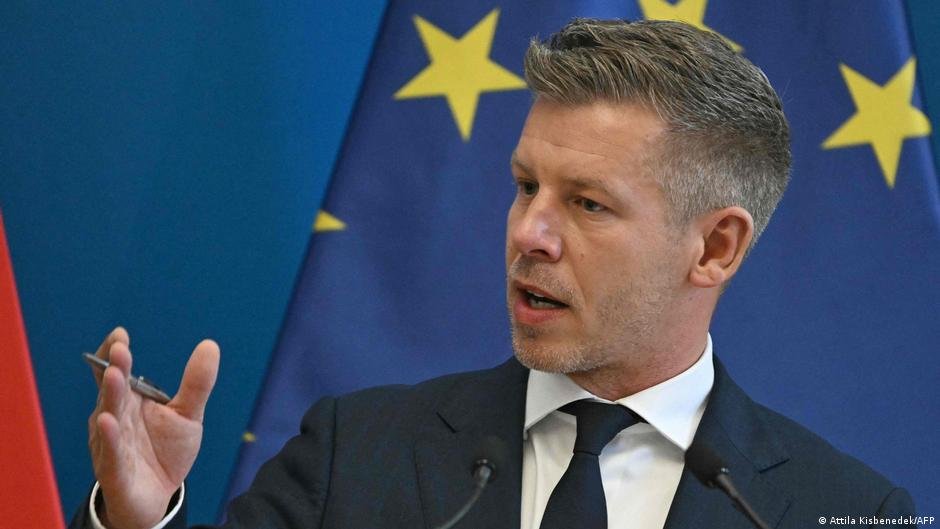
Hungary’s new prime minister, Peter Magyar, and his Tisza party want to retrieve funds and assets that went — in some dubious ways — to the family of ousted Hungarian leader Viktor Orban or his allies, various oligarchs, or frontmen. The new government wants those funds back for state use, and it also plans to hold the beneficiaries accountable under law.
Billions of euros were stolen or diverted and, if social media is to be believed, many Hungarians want to see the individuals responsible behind bars. Magyar has talked of a sum of around €60 billion ($70 billion), though other estimates suggest the real amount could be three times that much.
Orban, allies lived lives of luxury
Observers say the success or failure of the asset recovery will almost certainly influence the future of Magyar and the Tisza party.
The huge sums of money are linked to images of decadent luxury under Orban. The former Hungarian prime minister’s family, party members, and friendly oligarchs lived on luxury estates, flew in luxury jets, vacationed on luxury yachts, and repeatedly won billions worth of public contracts.
Orban-affiliated entrepreneurs, artists, academics, and journalists were also generously supported with public funds for years. Often their main qualification was loyalty to the former prime minister.
Those lifestyles contrasted with the lives led by Hungarians in poverty, the image of neglected public infrastructure, poor conditions in schools and hospitals, and the exodus of many young Hungarians from the country, as well as a huge deficit in the state budget, some 7.5% of Hungary’s national income. These contrasts explain why there is such a popular desire for justice.
It’s been almost four months since the new Magyar government took office and anti-corruption actions have officially started.
At the end of July, the new government established the National Asset Recovery Authority, or NVVH — a sort of “super institution” with very broad powers and independence.
Hungary hasn’t had an authority like this in its modern history. The way state assets were privatized in the 1990s after communist rule was problematic, as it often was elsewhere in the former Soviet bloc. When Orban first came to power in 2010, there was a half-hearted attempt to address the corruption of the previous government under Ferenc Gyurcsany, but it came to nothing.
This time, things are meant to be different.
The NVVH will investigate where public funds flowed and how assets like real estate were used. Although no specific date has been set, the investigations will primarily focus on the Orban government’s time in power, so dating back to 2010. The authority is also meant to make sure this cannot happen again, and will look into how public funds and assets are to be used in future.
The NVVH has both policing and prosecutorial powers, so it can investigate cases and bring charges. The authority is accountable to Hungary’s parliament.
Controversy around new anti-corruption body
But the creation of the NVVH has not been without controversy.
Late last week, parliament appointed Anna Unger, 46, a political scientist at Eotvos Lorand University in Budapest, to head the new anti-corruption and asset recovery body. Unger is an expert on political systems, democratic institutions, and party financing and was chosen out of almost 100 other applicants in a process with several stages.
Some were surprised at Unger’s appointment, as she wasn’t really a public figure. Her research has included political corruption but she’s not a recognized expert on the topic, nor is she a lawyer. Observers had expected a lawyer or an anti-corruption expert to get the job, somebody like Miklos Ligeti, head of legal affairs at Transparency International Hungary since 2012.
Ligeti also applied for the job but is reportedly being considered for a position as a deputy director. Unger will have four deputies with different duties and responsibilities. Katalin Tasnady, a well-known prosecutor with around two decades of criminal law experience, was made the NVVH’s deputy chief of investigations.
Government representatives said Unger had presented a comprehensive political vision for the agency’s work. During her parliamentary hearing, she said that under Orban, Hungary saw more than just what one might call classic corruption. An almost feudal system had prevailed, she argued. That was why in addition to restitution and asset recovery, the system had to be thoroughly investigated and exposed so that it would never happen again, Unger said.
No justice in next 6 years?
Unger caused the biggest upset when she said it would be folly to expect legally binding verdicts in any major corruption cases during the NVVH’s first six-year term.
Robert Puzser, a popular commentator and personality on social media, called Unger’s statement “devastating.” Voters had given Magyar “unprecedented power to hold the country’s plunderers to account,” he said on Facebook, and if Hungarians had to wait more than six years, it could cause the collapse of this new government.
The new prime minister himself reacted angrily to critics who said the NVVH should have had a lawyer at its head.
“Nobody promised people they could vote for the leader of the NVVH as if it was a [reality TV] casting show,” he wrote on Facebook. Plenty of experts thought Unger was absolutely suitable for the job.
In a podcast on the 24.hu media outlet, political science Gabor Torok surmised that the way that the NVVH had been established indicated that it would be a “strong political institution” that aimed to come to terms with the recent past.
Torok said the public expects the Tisza party to thoroughly reckon with the old system, and the new government will only be able to maintain the public’s trust if it doesn’t look like the “culprits of the previous order” are getting away with their past crimes, he said.
This article was originally written in German.