
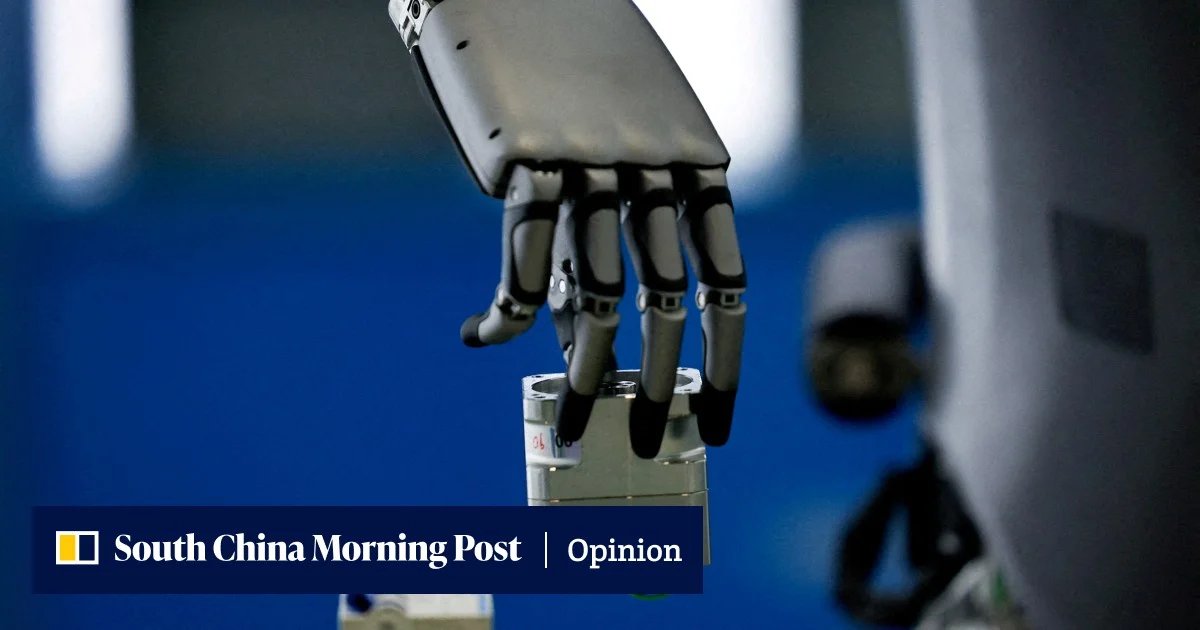
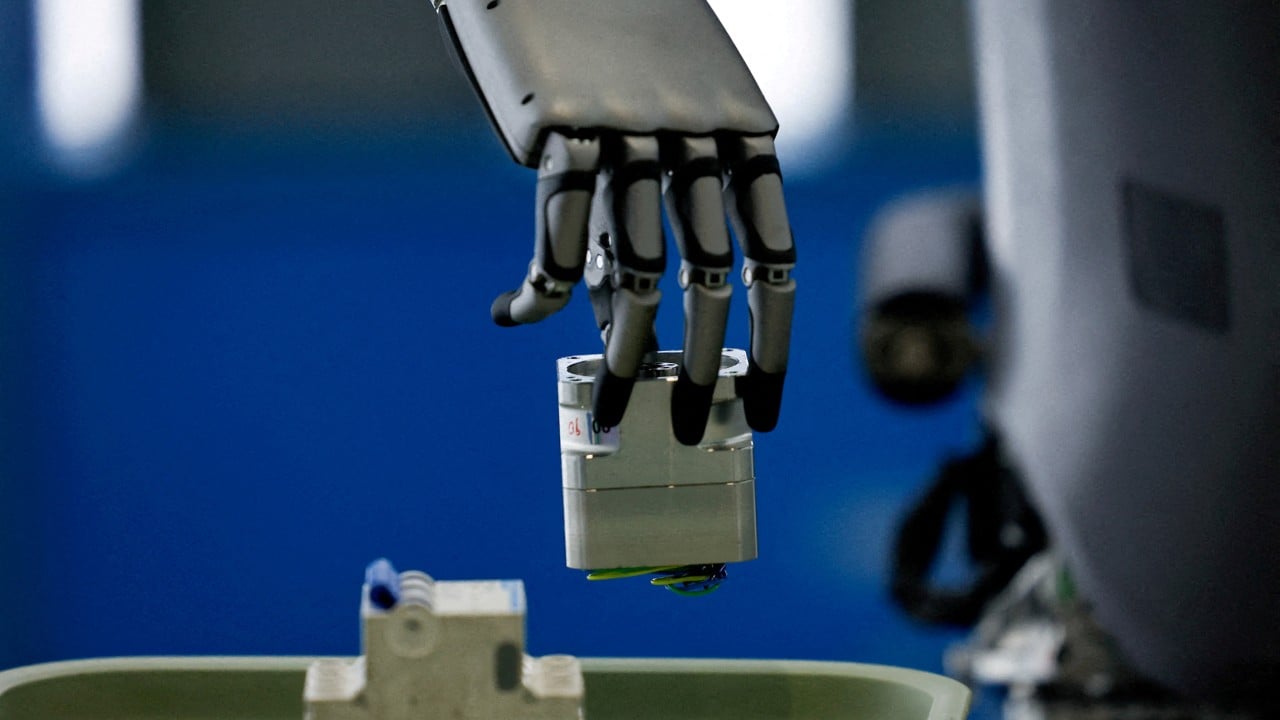
China’s robots have become skilled at commanding a stage. At last month’s World Robot Conference in Beijing, humanoids sorted parcels, packed phones and performed household chores. Unitree Robotics, whose machines can run, dance and perform martial arts, made an equally dramatic entrance on the Shanghai stock market, closing its first day of trading at more than five times its offer price.
The spectacle is real, and so is the engineering achievement behind it. However, this can obscure a more useful way to think about China’s robotics boom. Two different bets are taking shape. One asks how much capability can be packed into an increasingly versatile body. The other asks how much useful intelligence can travel across different bodies.
Unitree is a leading example of the first approach. Its strength in locomotion and motion control has helped push Chinese humanoids forward at remarkable speed, yet founder Wang Xingxing has also been candid about the software challenge ahead. He said last month that a breakthrough allowing robots to handle unfamiliar environments and tasks could come in two or three years in an optimistic case, or it could take as long as a decade.
That uncertainty does not make humanoids a bad bet. Rather, it shows how difficult the physical world is. Language models can learn from an immense digital record. Robots must deal with gravity, glare, clutter, deformable objects, unexpected obstacles and mistakes that can damage equipment. A demonstration might last minutes; an industrial customer expects a system to work shift after shift.
There is also a question of priorities. A household robot that folds laundry or sweeps the floor makes for a charming demonstration. Given that global youth unemployment stood at 12.4 per cent last year, automating household chores might not be the productivity revolution many economies most urgently need. If a young person is out of work and at home, outsourcing the dishes to a humanoid hardly feels like the breakthrough the economy is waiting for.
Stanford computer scientist Fei-Fei Li has framed the deeper challenge as spatial intelligence. Artificial intelligence must do more than recognise the world; it must understand three-dimensional space well enough to reason and act within it. Her work is also a reminder that a robot need not look human. Intelligence can inhabit many forms.


