Mohammed Musleh is still in shock. Following the Houthi capture of the port town of Mokha earlier in September, his family had to flee their home without time to pack.
“We have no idea what will happen now,” the 46-year-old told DW. His wife, Muna, is also worried, as the family couldn’t bring their personal identification documents. “The Houthis told us to leave, basically immediately. We had no time to take anything,” she said.
For now, the family and their two young daughters are staying with relatives in Aden, the largest city controlled by the government in southern Yemen. “We tell our kids in the meantime that we hope to return home soon,” the couple said.
Rashad al-Alimi, chairman of the Presidential Council, the leadership body of Yemen’s internationally recognized government, said that recent battlefield changes would not alter the government’s goal of restoring state authority nationwide.
However, given the latest advances by the Iran-backed Houthis and their territorial gains in Yemen, a return of the Musleh family to their home in Mokha is unlikely for now.
Since late July, the Iran-backed Houthis have expanded their areas of control from the north and center of the country to much of Yemen’s Red Sea coast, seizing territory from forces of the internationally recognized and Saudi-backed government. The conflict continues to escalate, along with an exchange of missile and drone attacks between the Houthis and Saudi Arabia.
The Houthis are currently pushing further into the country toward the strategic Kahboub Mountains. The mountain range is significant as it overlooks areas around the Bab el-Mandeb Strait, a key waterway that had been serving as an alternative route for Saudi oil exports amid Iran’s blockade of the nearby Strait of Hormuz.
Staying at home or leaving Taiz?
The mountains are also only around 40 kilometers (25 miles) southwest of Taiz, which is under government control.
Fatima, a mother in Taiz, has been telling her children that the sounds of shelling are from fireworks. “We are scared and we are also worried as gas has already become unavailable and prices are rising. Merchants are no longer coming into Taiz,” she told DW, asking not to publish her full name for fear of reprisal.
Rania and her children have also decided to stay at home in Taiz for now. “But we fear that if the Houthis tighten their grip on the city of Taiz, we will find ourselves under siege again,” she said. She also doesn’t want to use her first name, and vividly recalls the “suffocating blockade of 2015 and 2016, when the entry of food and goods was cut off.”
During the previous war between the Iran-aligned Houthi group and the Saudi-backed Yemeni government, which began in 2014 and largely ended with a UN-brokered ceasefire in 2022, Houthi forces blocked most routes into the government-controlled city of Taiz for almost two years. The restrictions on food, medical supplies and humanitarian aid drove up prices and left people on the brink of famine.
Growing displacement numbers
The World Health Organization said this week that at least 674 people have been killed and 2,998 injured since fighting escalated in August. However, due to the ongoing clashes, the death tally may already be higher, as fighting is ongoing.
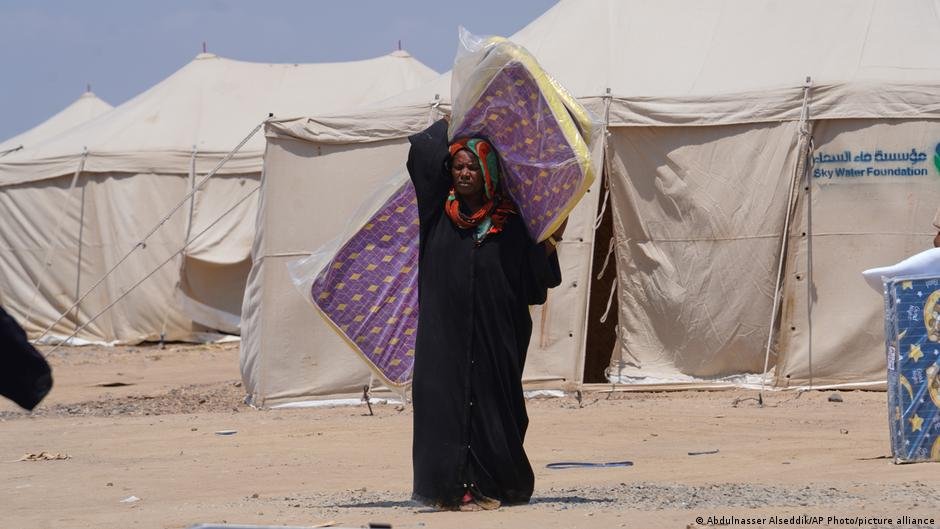
The conflict has also prompted mass displacement of more than 132,000 people, according to the International Organization for Migration. In recent days, more than 90,000 people found refuge in Aden, Lahj, Abyan and Al Dhale’e governorates and even in Marib, the UN refugee agency’s Yemen representative Armen Yedgaryan saidon Tuesday.
He also predicted that intensifying fighting could drive more mass displacement, with growing numbers of people expected to flee to Djibouti, Somalia and other countries, as well as within Yemen.
“Conditions for displaced people are increasingly severe as they arrive at already congested displacement sites in urgent need of shelter, food, clean water, healthcare and protection, placing additional pressure on fragile services and infrastructure,” he said.
Even before the latest escalation, more than 5.2 million people were internally displaced in Yemen, and the current fighting is deepening an already dire humanitarian crisis in the country, the UN refugee agency added.
Around 22 million people require humanitarian assistance, including internally displaced people and around 65,000 refugees and asylum-seekers, mainly from Somalia and Ethiopia.
Displaced Yemenis help other displaced Yemenis
“I was in the Al-Kud site, a camp for internally displaced people or IDPs, in Abyan governorate on Sunday,” said Alison Bottomley, an advocacy adviser with the Norwegian Refugee Council in Yemen, adding that “317 families have arrived since the fighting began, increasing the number of people from 1,460 to 2,629 people.”
However, there is no funding to support them. “These IDPs are surviving purely off the generosity of other IDP families.”
She told DW that she met Mustapha, a man who was displaced from his hometown of Mawza seven years ago during the previous war in Yemen. He has been living at the IDP site ever since. “He told us he was hosting 22 families in his shelter, all people from his hometown in Mawza. Together, they share a single latrine. When I asked how they were all eating, he said they share one meal together every other day.”
Houthi leader Abdul-Malik al-Houthi, meanwhile, released a video message in which he told Yemenis in western and southern provinces that they are not the target.
However, Yemeni political analyst Hisham Al-Omeisy said these are empty words.
“The Houthis may measure this offensive in kilometers gained and territory seized, but Yemenis are measuring it in homes abandoned, families torn apart, and lives lost,” he told DW.
“There is something profoundly cruel about pursuing military gains while ordinary Yemenis are once again being condemned to fear, hunger and displacement,” Al-Omeisy said, adding that “the lines on the map may change, but the blood, grief and shattered lives behind those lines belong to real people. Yemen’s civilians cannot continue to be treated as collateral damage in the Houthis’ pursuit of power.”
Edited by: Andreas Illmer