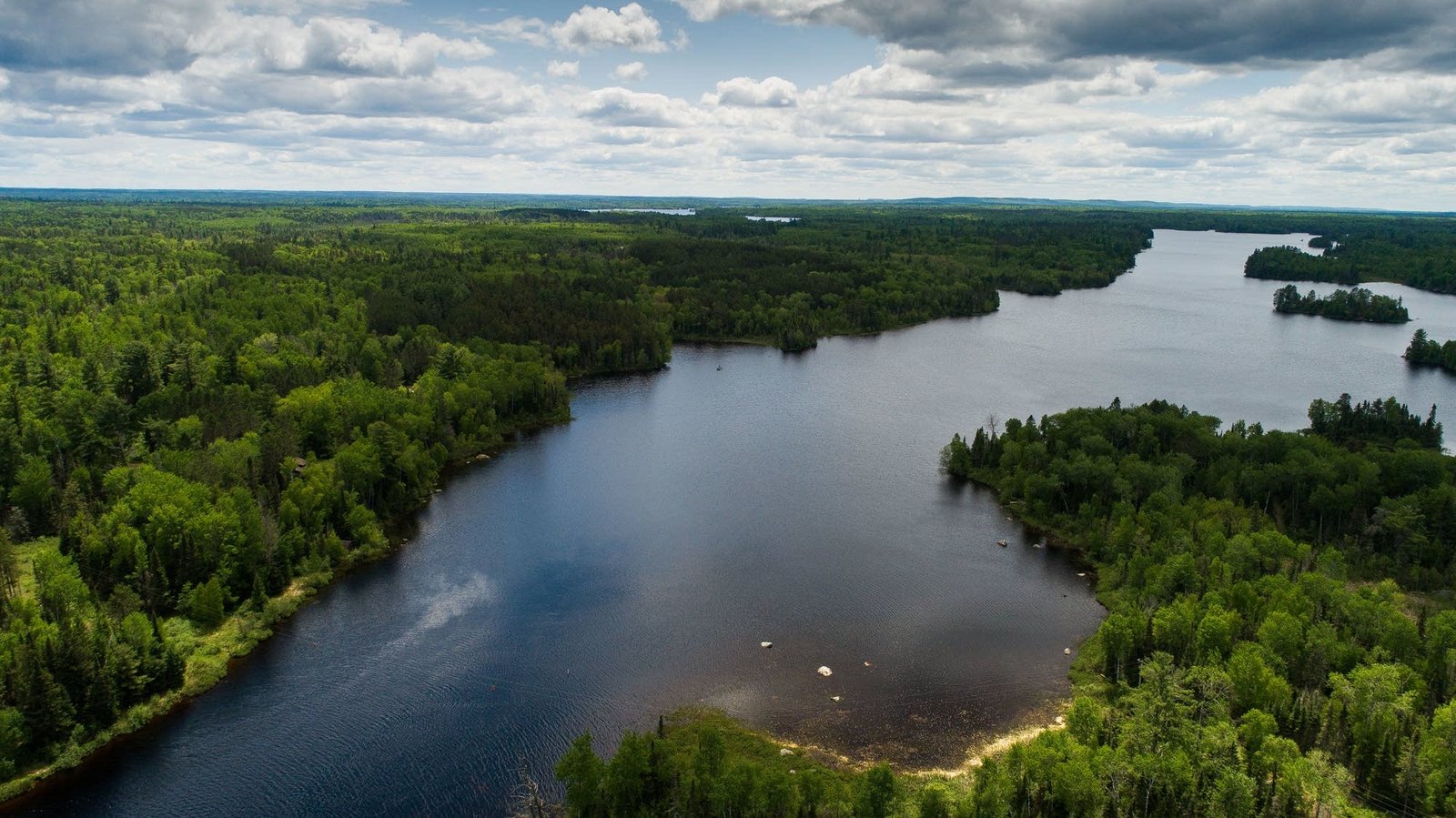

Minnesota Gov. Tim Walz issued a sweeping executive order Tuesday that aims to prevent the mining of copper, nickel and other precious metals within the watershed of the Boundary Waters Canoe Area Wilderness in northeast Minnesota.
The order directs the Minnesota Department of Natural Resources and the Minnesota Pollution Control Agency not to issue any mining permits or leases in the area, which spans about 350 square miles of the Superior National Forest within the Rainy River headwaters surrounding the wilderness.
Any proposed mining project in the state — even on federal lands — requires permits and environmental approvals from state agencies before it can move forward.
The order also would halt any new environmental review of nonferrous (non-iron ore) mining proposals within the watershed, and would not allow state agencies to cooperate with the federal government on the review of any proposals.
The executive order, if it stands, would likely end the prospects of Twin Metals, a subsidiary of the Chilean mining company Antofagasta. Twin Metals has worked for over a decade to build an underground copper-nickel mine about nine miles southeast of Ely and just three miles from the southern edge of the wilderness.
Twin Metals’ project along Birch Lake consists of both federal and state mineral leases.
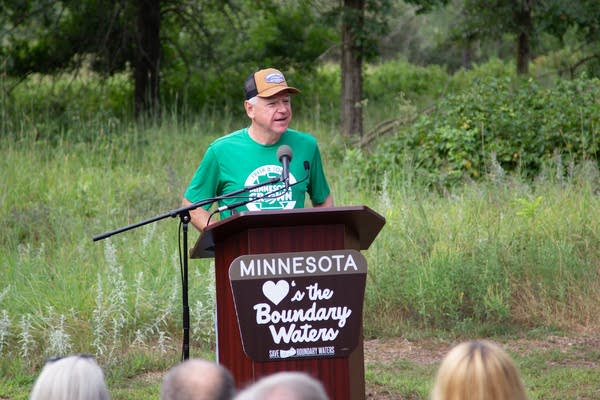
“I am using my full executive authority to protect the waters and wildlife of the Boundary Waters and to ensure the outfitters, small businesses, and communities that depend on it continue to thrive for generations to come,” Walz said in a statement accompanying the executive order. “It’s our duty as Minnesotans to ensure the sacred place remains wild, pristine, and unharmed.”
Reaction from mining opponents, supporters
The action is being celebrated by conservation groups that have long argued that this kind of mining is too risky for the water rich environment of northern Minnesota. Copper-nickel mining carries with it much more serious risks for serious water pollution than iron ore mining, which has a 140-year-long history in the state.
“We don’t believe that this fragile, deeply interconnected freshwater ecosystem is the right place for an industry with a terrible environmental track record. This type of mining has not been done without some form of pollution to surface or groundwater,” said Ingrid Lyons, executive director of Save the Boundary Waters.
Mining is not allowed inside the Boundary Waters, nor in a small buffer zone around it. Environmental groups have argued it is also important to protect the broader watershed, because any mining pollution in those 225,000 acres outside of the BWCA could flow directly into the protected wilderness area.
But advocates for what would be a new kind of mining in Minnesota, including labor and business groups, argue it could provide an enormous boost to the region’s economy.
They also emphasize that mining companies should be allowed to go through the established review and permitting process — and if they can’t demonstrate that their projects can be operated safely, then they shouldn’t be allowed to open.
Julie Lucas, executive director of the industry group Mining Minnesota, called the order “a political decision dressed up as an economic one.” She said the Minnesota DNR under Walz has already reviewed the state’s rules that govern copper-nickel mining and found them largely protective of the Boundary Waters, although that decision is being reviewed in state court.
“With this action today, the governor is bowing to the demands of special interests, ignoring the findings of his own government and causing even greater delays for workers who need jobs,” Lucas said.
Mining advocates, including Minnesota Republican Congressman Pete Stauber, have argued that modern mines could both protect the environment and provide high-paying jobs, while producing important minerals needed for clean energy and other technologies.
In a statement Thursday, Stauber called Walz’s order “a spiteful and harmful attack against the hardworking people of the Iron Range.”
“Years of rigorous review, environmental study, and massive private investment have been erased in seconds by a deeply unpopular governor, who has once again shown that he places far-left ideology above Minnesotans’ jobs and economic future,” Stauber said.
Latest move in yearslong debate
Walz issued the executive order four months after Congress voted to overturn a 20-year federal ban on mining in the area that had been instituted under the Biden administration.
It’s just the latest move in a long political tug of war over the potential for copper-nickel mining in northeastern Minnesota. It limits the mining of a significant portion of the Duluth Complex, one of the largest undeveloped deposits of copper, nickel, cobalt and other platinum-group metals in the world.
The Obama administration first proposed a possible 20-year mining moratorium just before he left office in 2017. President Trump quickly halted that process during his first term. Then Biden restarted it, and ultimately approved the so-called mineral withdrawal in 2023, saying that any mining pollution could cause irreparable harm to the Boundary Waters.
Trump then reversed that ban earlier this year. And now Walz is acting at the state level to prevent mining from occurring in the area.
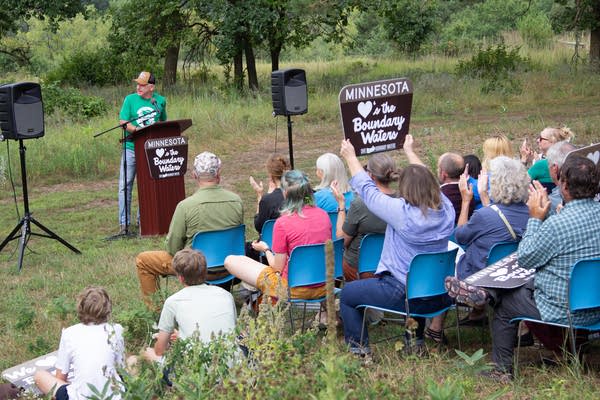
“At a time when the federal government is stepping back on its commitment to protecting the environment and the people who live here, the state of Minnesota under Gov Walz’s leadership is stepping up,” Minnesota Pollution Control Agency Commissioner Katrina Kessler said in a statement Tuesday morning.
But as an executive order, the action could be overturned by a subsequent administration without going through the state legislature.
The order calls on the Minnesota DNR to draft legislative language to permanently prohibit mining in the Rainy River headwaters. The prospects of such a bill are unclear in a closely divided state legislature. Similar legislation introduced in recent sessions has stalled.
Walz has deep personal connections to the Boundary Waters, something he’s discussed when addressing the major wildfires still burning in the wilderness.
He’s taken many family trips into the wilderness. About a decade ago, his brother Craig was killed when several trees blew down over his campsite in the BWCA. Walz’s nephew, Jake, survived with several broken bones.
Walz is placing the mining executive order in the context of what he says has been broader action to protect the environment for the nearly eight years he’s been in office, ranging from efforts to address climate change and reduce greenhouse gas emissions, ban so-called “forever chemicals,” speed up permitting for clean energy projects and planting millions of trees.
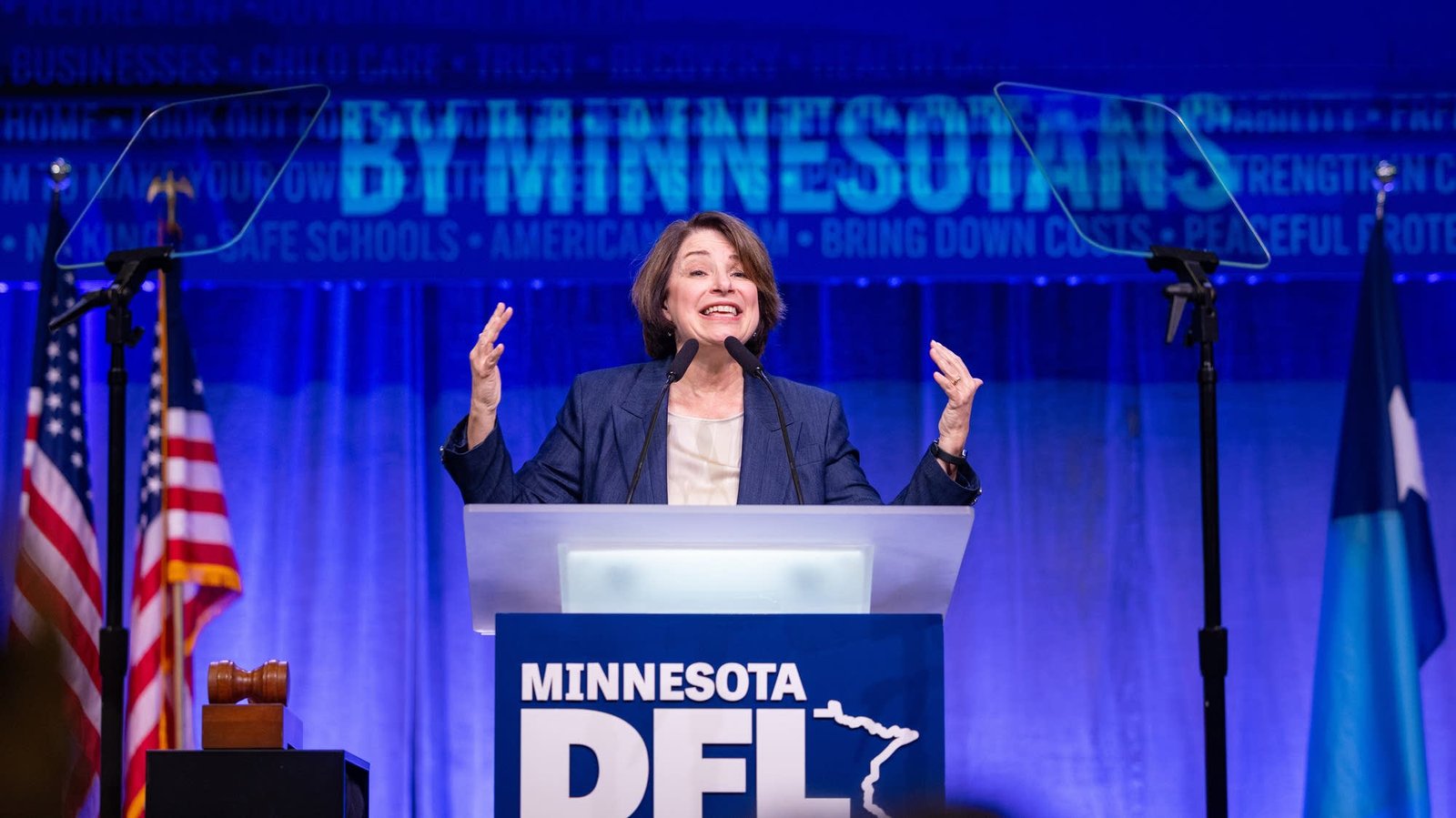
Walz is not running for re-election this year. Democratic U.S. Sen. Amy Klobuchar and Republican State House Speaker Lisa Demuth are the two major-party candidates on the November ballot to replace him.
Demuth issued a statement Tuesday morning saying that Democrats “continue their hostility toward Minnesota mining, taking job growth opportunities off the table before they can even go through the regulatory review process.”
“As Governor, I will work each day to ensure mining is part of Minnesota’s future. We can do it safely here better than anywhere in the world, protecting our beloved outdoors while benefiting from the job creation and tax revenue these projects bring to northern Minnesota,” Demuth said.
In an interview with MPR News shortly after Walz announced his executive order, Klobuchar said she hadn’t yet had a chance to look at the wording of that measure.
Klobuchar said she has serious concerns about mining next to the BWCA, but also noted that “there is other mining going on across the Range, including Mesabi Metallics iron ore mine about to open up, and some other proposed mining projects that don’t endanger the Boundary Waters, that I think it is important to continue to allow pending environmental reviews to go forward.”
Other politicians are also weighing in.
“Today’s decision by a lame-duck governor with one foot out the door is a devastating blow to the Iron Range and the entire Northland,” said Republican state Rep. Roger Skraba, whose district includes Ely.
DFL state Sen. Grant Hauschild, who also represents the region, said he also disagreed with the order.
“A decision this significant to the people of the Northland should not be made through executive order by a governor who leaves office in a matter of months,” Hauschild said.
But the move was praised by DFL state Rep. Alex Falconer of Eden Prairie, who has sponsored legislation to ban copper-nickel mining within the headwaters of the Boundary Waters.
“I hope the momentum of today’s actions by Governor Walz will carry into the next legislature and we can pass my bill to permanently protect the Boundary Waters from sulfide-ore copper mining,” Falconer said.